
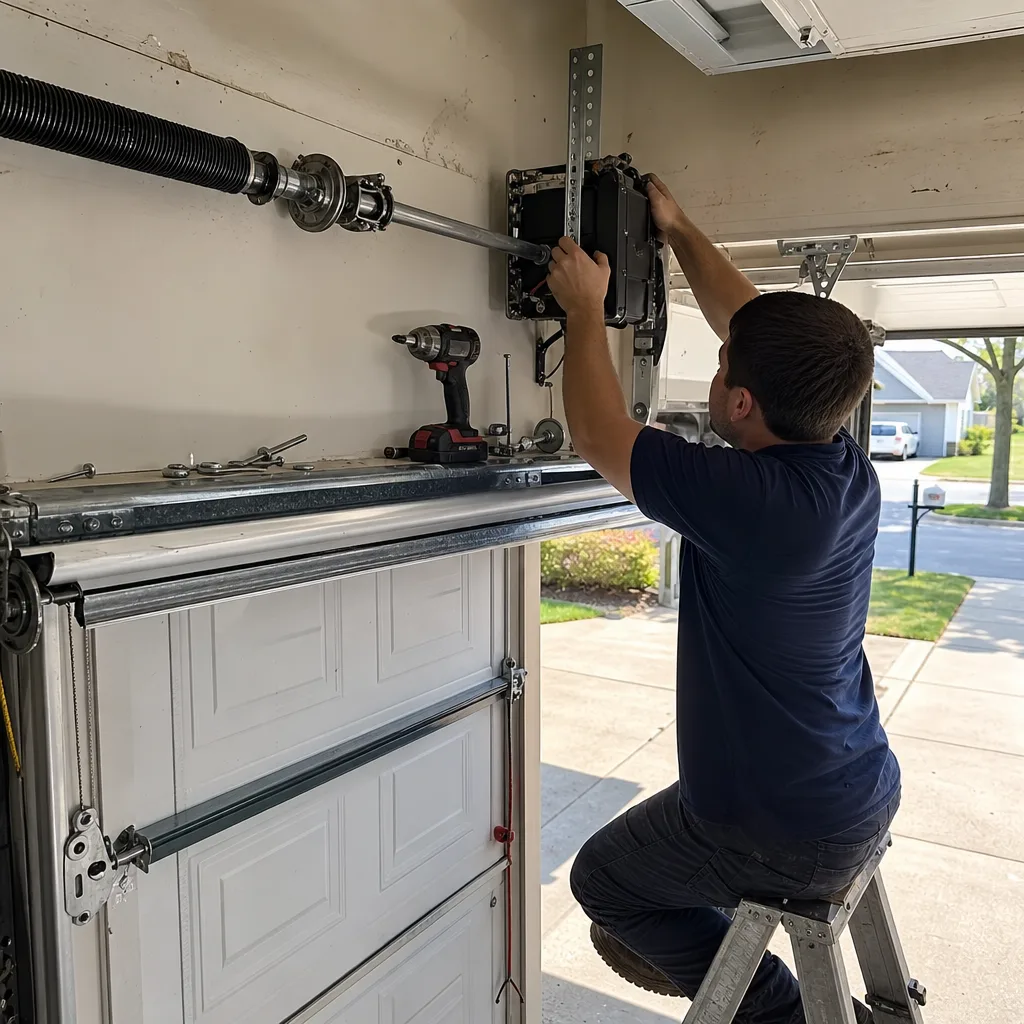
Last updated November 22, 2026
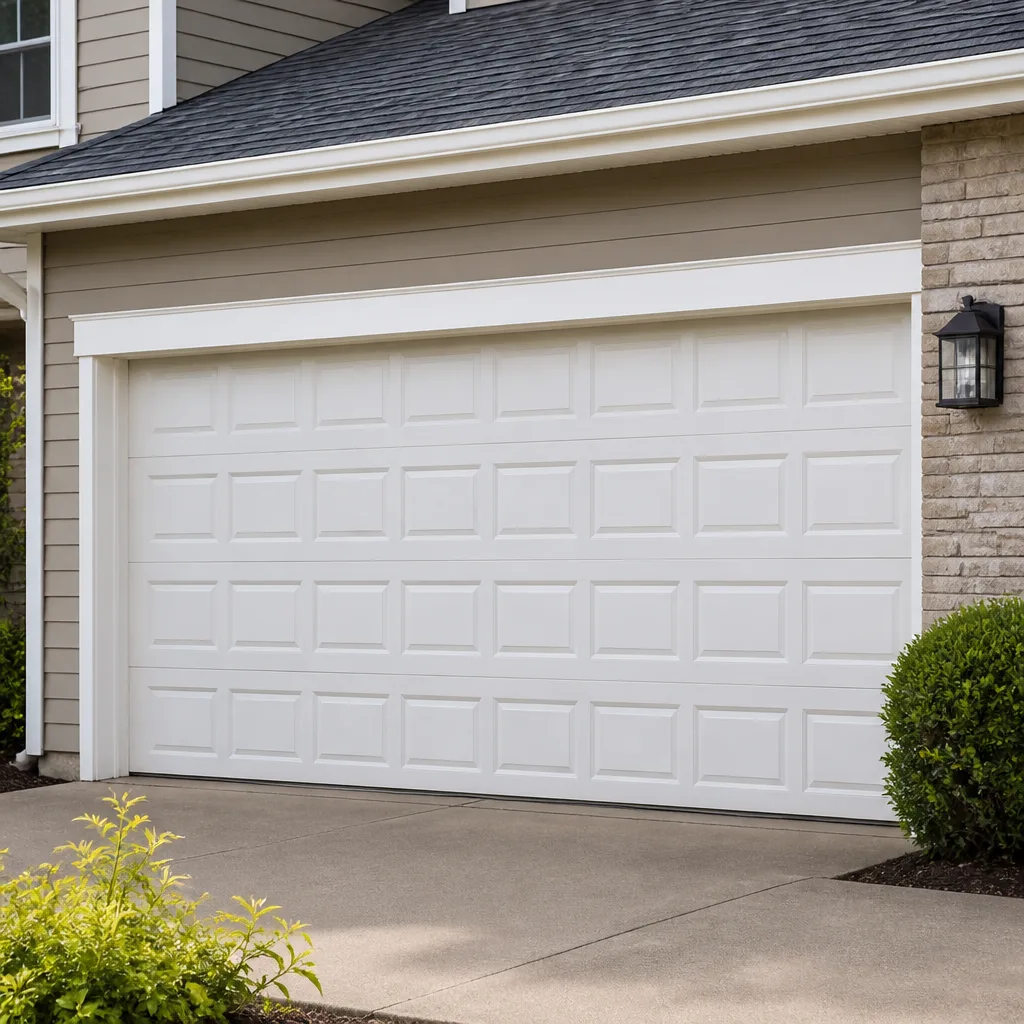 Raised-panel steel
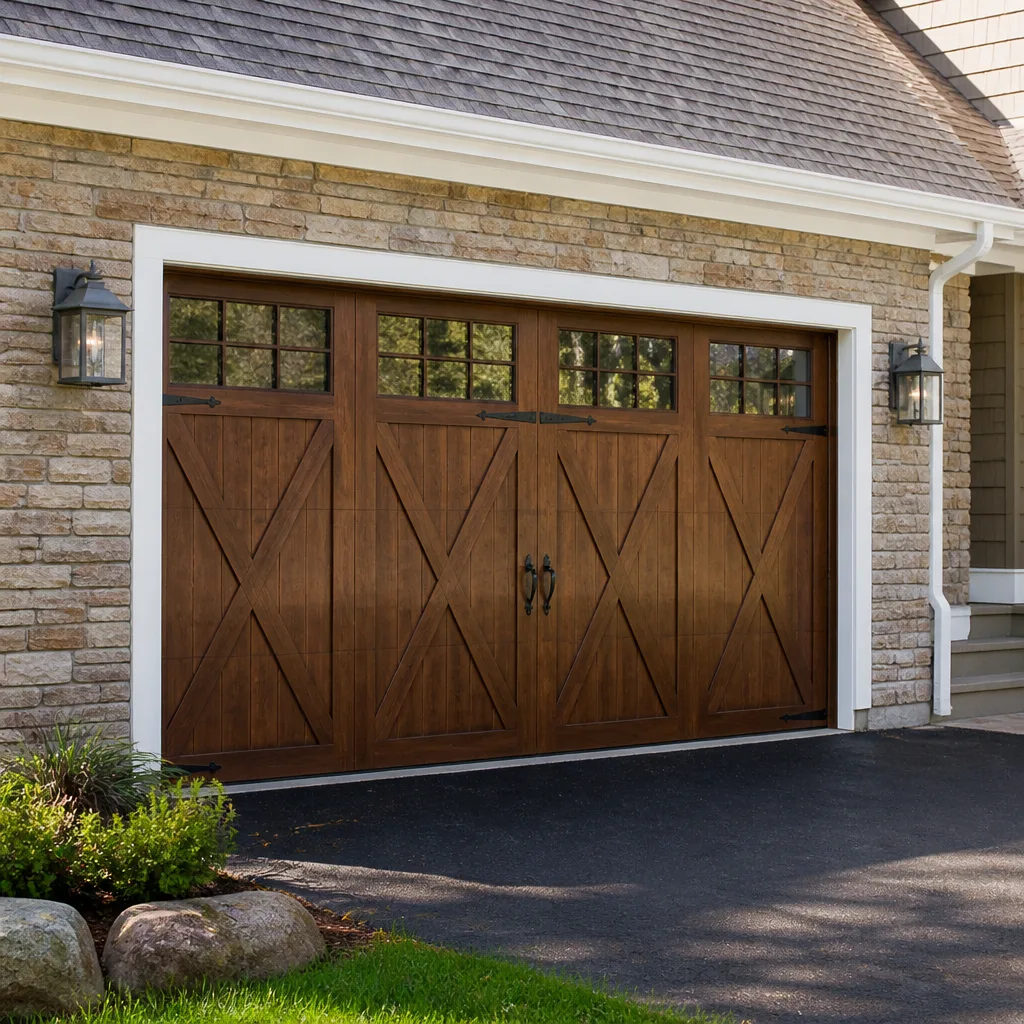 Carriage house
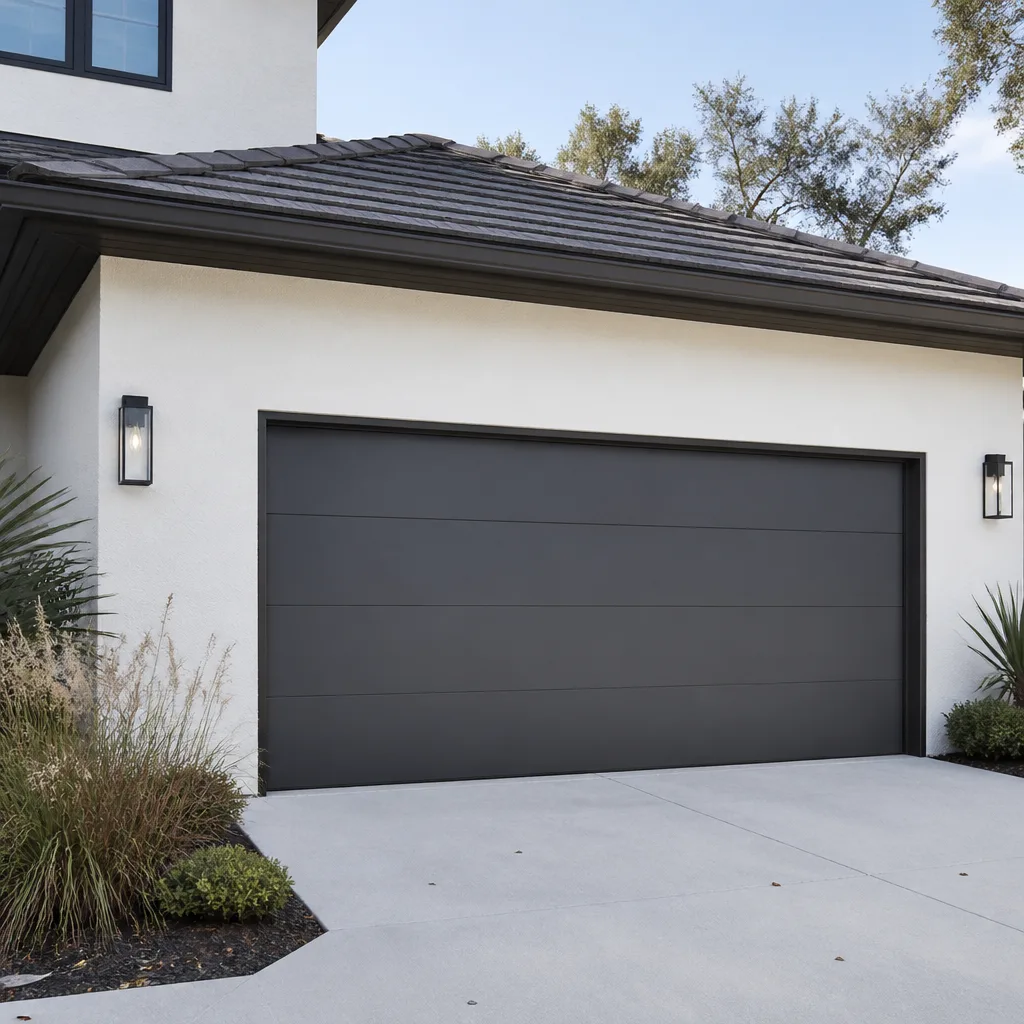 Modern flush
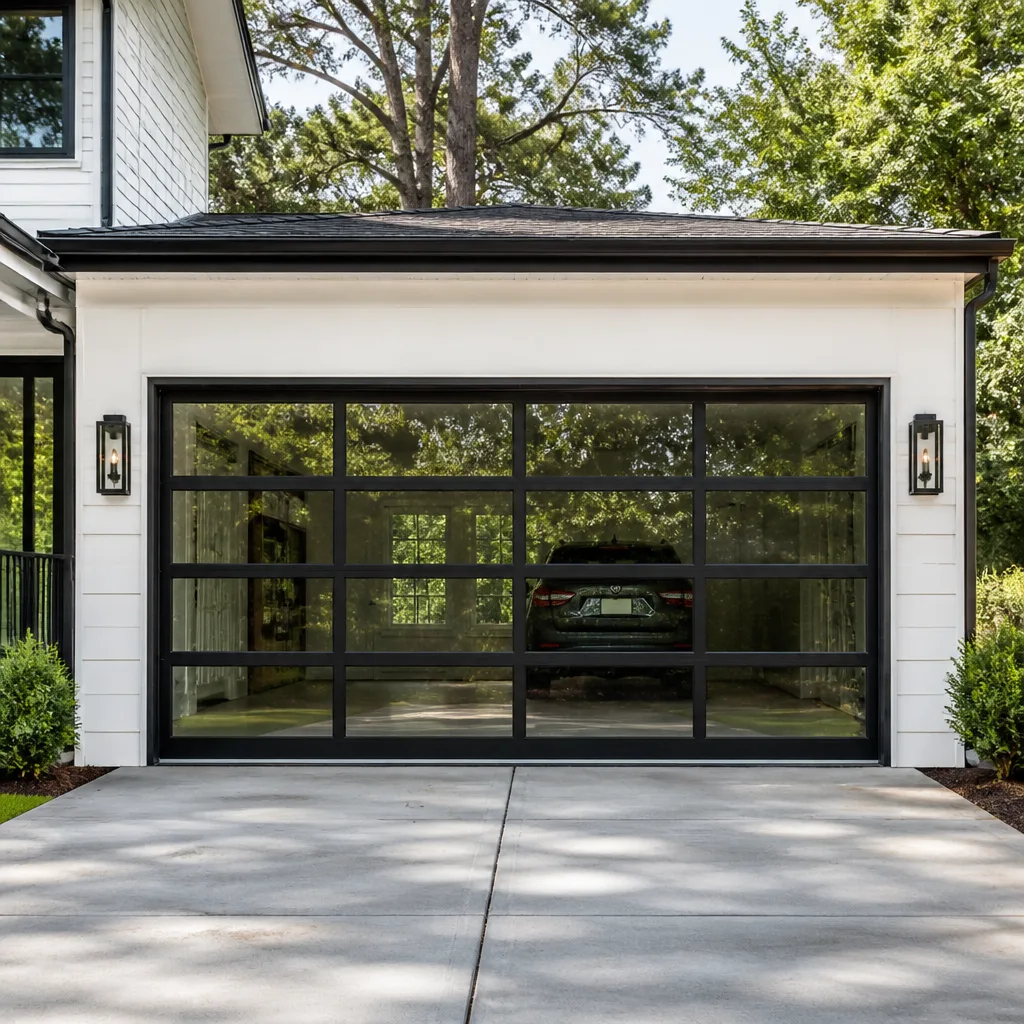 Full-view glass
 LiftMaster openers
 Chamberlain openers
Full 25-point door and opener safety check with every visit - springs, cables, rollers, tracks, and your LiftMaster or Chamberlain opener included
You get a price before we start. It does not change when the pro arrives.
Get your free estimateGarage Door Cost Breakdown: The Plainfield Homeowner’s Reference for 2026
Two Plainfield homeowners can get quotes for “a new garage door” that differ by $800, and both quotes can be completely legitimate. That’s the part most cost guides skip. Both contractors are pricing real doors and real labor; they’re just pricing different specifications, and the homeowners don’t yet know which questions they’re actually asking. One quote includes an insulated three-layer door with a higher R-value and a belt-drive opener with a battery backup. The other includes a basic steel door and a chain-drive unit. Neither is a scam. Only one matches what that homeowner actually wanted. This reference is built to close that gap. We’ll walk through the components, the insulation curve, the repair-versus-replace math, and what Plainfield labor rates actually reflect, so you can read a bid instead of guessing at it.
Quick Answer
A standard single-car garage door replacement in Plainfield in 2026 typically runs $950 to $2,200 installed, with most homeowners landing between $1,200 and $1,700. A double-car door with a comparable build is usually $1,600 to $3,400 installed. Repair jobs, from springs to openers, typically fall between $150 and $650 depending on the component. The written estimate sets the final price, and it’s quoted and agreed before any work starts.
Styles & brands we work with
- Raised-panel steel
- Carriage house
- Modern flush
- Full-view glass
- LiftMaster openers
- Chamberlain openers
Table of Contents
- What are the line items in a Plainfield garage door quote?
- How much does insulation R-value add, and when does it pay back?
- Why doesn’t a double-car door cost twice a single?
- Repair or replace: where’s the math breakpoint?
- What do Plainfield labor rates actually reflect?
- What do springs and openers cost on their own?
- How do you compare two quotes in Plainfield the right way?
- Common Mistakes to Avoid
What are the line items in a Plainfield garage door quote?
Most garage door quotes are broken into five components: door panels, hardware, springs, opener, and labor. Homeowners usually see only the total, but the components are where the $800 gap lives. When you can read a bid line by line, you can tell whether you’re paying for a stronger door, a better opener, or simply a different labor assumption.
Here’s what a typical itemized quote looks like in the Plainfield market for 2026:
- Door panels (single-car): $550 to $1,400 depending on steel gauge, layer count, and insulation. A basic single-layer steel door sits at the bottom; a three-layer insulated door with a higher R-value sits at the top.
- Door panels (double-car): $900 to $2,400. Wider panels cost more than the width suggests because they need heavier torsion hardware.
- Hardware kit: $80 to $200. Hinges, rollers, brackets, and bottom seal. Stainless rollers cost more than basic steel and run quieter.
- Springs: $120 to $320 for a torsion spring setup. Cycle rating moves the number; a higher-cycle spring costs more but lasts longer.
- Opener: $250 to $650 installed, depending on chain, belt, or screw drive and whether battery backup or smart connectivity is included.
- Labor: $350 to $800 for a full replacement. This covers removal, disposal, track leveling, spring tensioning, and sight-safety checks.
Nobody should quote you a replacement without confirming the existing door’s dimensions, the header clearance, and the ceiling situation for the opener. In Plainfield, most homes have standard eight-foot or nine-foot ceilings in the garage, which keeps the opener selection straightforward, but track configuration varies enough between builds that a phone-quoted number isn’t a real estimate.
How much does insulation R-value add, and when does it pay back?
This is where most Plainfield homeowners accidentally buy more than they need, or less. Insulation adds $150 to $600 to a door, and the payback question isn’t “does insulation save energy” (it does) but “does the next jump in R-value save enough to justify the price step.”
The added insulation protects two things in a Plainfield home: the temperature of the garage itself and the temperature of the room above it or beside it. If your garage is attached and shares a wall with a heated room, an insulated door meaningfully reduces heat transfer through that shared wall. If your garage is detached and unheated, the return is smaller because there’s no conditioned space to protect.
Here’s how the R-value cost curve plays out in practice:
- R-0 to about R-6 (single-layer steel): The cheapest option. Suitable for detached garages or storage use where interior comfort doesn’t matter.
- R-6 to R-10 (two-layer, insulated core): The typical sweet spot for an attached Plainfield garage. The price jump is modest, and the comfort difference is noticeable in winter.
- R-10 to R-16 (three-layer with higher-density foam): Worth it if the garage is used as a workspace, has living space directly above, or is in a home where the garage boundary matters to utility costs. Above this point, the payback curve flattens quickly for most standard Plainfield homes.
- Above R-16: Rarely justified for a residential garage in this climate unless the garage is conditioned space. The door itself is now priced for performance you likely won’t recover.
Indiana’s hot summers and cold winters make a two-layer door a sensible default for attached garages. But if you’re already paying for a better door, ask the estimator to tell you which R-value they’re quoting and why. If they can’t explain the choice, the door is probably being sold on looks, not on how it will actually perform in a Plainfield climate.
Why doesn’t a double-car door cost twice a single?
A double-car garage door typically costs 60% to 75% more than a single-car door, not 100% more, and the reason is that some costs are fixed. Labor, hardware, track, and site setup don’t scale with width. Each job requires the same number of technicians, the same tools, the same safety checks, and the same disposal. The only variable that scales meaningfully is the size and weight of the door panels and the durability required of the springs.
Here’s what stays roughly the same across a single and a double:
- Labor hours for removal and installation
- Hardware kit (hinges, rollers, brackets, weather seal)
- Track and mounting hardware
- Disposal of the old door
- Safety inspections and final testing
And here’s what actually grows on a double-car door, which is where the extra cost lives:
- Panel cost, because more square footage of steel or insulation is being bought
- Springs, because the door weighs meaningfully more and the torsion bar must be sized for it
- Occasionally the opener, if the door’s weight pushes past the capacity of the original motor
The savings aren’t a discount, they’re shared costs. The trap is expecting $1,200 of savings on a double and getting suspicious when a quote comes in at $2,400. If you’re comparing a $1,500 single and a $3,000 double, ask the estimator what the double’s panel and spring line items are. The math should hold up on the page. If the double is priced exactly double, ask why the labor and hardware line items scaled with the door size; that’s a fair question.
Repair or replace: where’s the math breakpoint?
The general rule Plainfield homeowners should use: when repair plus the expected cost of the next two years of repairs exceeds about 50% of a replacement, replace. The threshold shifts depending on the door’s age and which components have already failed. A door that’s 5 years old and needs a spring is clearly a repair. A door that’s 20 years old and needs springs, a panel, and an opener is usually a replacement.
Here’s the decision in numbered steps, which is how we walk through it on-site:
- Confirm the door’s age and manufacturer. Doors made by Amarr, Clopay, Wayne Dalton, and Raynor have model plates on the inner side of a top or bottom panel that tell you the line and approximate year. That anchor matters more than memory.
- List what’s actually broken versus what’s wearing. A snapped spring is broken. Frayed cables are wearing. Worn rollers are wearing and cheap to replace. Knowing the difference prevents replacing a door over a $4 roller.
- Look for structural intrusion. Rust-through on a bottom panel, separated skin from the frame, dented tracks that could be straightened but not made true again, and cracked hinge plates all raise the replacement math. Cosmetic damage alone usually doesn’t.
- Price the actual repair. If spring replacement plus a competent tune-up runs $300 to $500 and the rest of the door has years of life left, repair almost always wins. Ask for that number first.
- Price the replacement with a like-for-like door. Compare replacement against a door of the same class, not a higher one. Otherwise the math leans toward repair by default and you’ll live with a door that keeps nickel-and-diming you.
- Apply the 50% rule. If the total repair estimate plus expected near-term follow-up repairs crosses half the cost of a replacement, replace. Below that, repair and revisit in two years.
What changes the threshold in Plainfield specifically: doors facing west take the strongest direct summer sun, and fading or heat-buckled panels show up sooner on those faces. Doors facing north tend to hold panels longer and their hardware outlasts the rest. That’s a real factor in the repair-versus-replace call when a door has several options in front of it.
What do Plainfield labor rates actually reflect?
Garage door labor in Plainfield typically runs $90 to $140 per hour for a two-technician crew, which sits slightly under central Indianapolis rates for the same work. That difference is real and it’s mostly structural, not a sign that one market is doing something wrong. It reflects overhead, drive distance, permit admin, and the pricing behavior of the local market rather than a difference in technician skill.
Here’s the honest breakdown of what drives the labor line on a Plainfield quote:
- Crew size. Torsion spring work and full-door replacements require two technicians for safety, so the labor line reflects two wages, not one.
- Spring tensioning time. Torsion springs must be wound by hand to a specific number of turns. That step alone is 20 to 40 minutes of skilled labor and it’s where experience earns its cost.
- Track leveling and door balancing. A door that isn’t balanced will fail or wear prematurely. Balancing is 15 to 30 minutes per job and it isn’t optional on a good installation.
- Overhead. Insurance, tool replacement, vehicles, and licensing all feed into the hourly number. Lower hourly rates in some Plainfield quotes reflect lower overhead, which you should ask about rather than assume is a bargain.
- Travel distance to Plainfield neighborhoods. A contractor driving from the far west side has a materially shorter trip than one coming from the east side of Indianapolis. That distance shows up in overhead, not as a line item.
Indiana permits vary by municipality but Plainfield generally requires a permit for structural work involving the garage opening, and most garage door replacements don’t require one because the opening itself isn’t being modified. When a permit is required, ask the estimator whether it’s included in the quote. A quote that leaves permitting off the line item isn’t cheaper, it’s just incomplete.
What do springs and openers cost on their own?
Two repairs dominate the garage door cost conversation in Plainfield: springs and openers. Both are common enough that we quote them constantly, and both are priced per component, not per door.
Springs. A torsion spring replacement typically runs $180 to $340 for one spring. Torsion systems use a matched pair, and matched pairs are usually replaced together, so a full pair lands around $360 to $680. A door with an extension spring setup (older construction, usually Wayne Dalton and older Craftsman doors) runs $120 to $260 for a pair of extension springs. Cycle rating matters here: a standard spring is rated for 10,000 cycles, and higher-cycle springs are available at a modest premium.
Openers. A LiftMaster or Chamberlain belt-drive unit typically runs $380 to $650 installed, with chain-drive units at $250 to $450. Genie screw-drive units sit in the middle at $320 to $520. Battery backup and smart-home integration each add $60 to $120 to the installed price. Raynor and Amarr doors with older openers may need adapter brackets, which usually add $30 to $80 to the install.
What homeowners often miss: the opener and the door are priced separately, but they’re diagnosed together. If the door won’t move, the cause could be a failed opener motor, a snapped spring, a cable off its drum, a binding track, or a failing logic board in the opener. A technician who only works on openers will guess; a technician who works on doors and openers will test both before pricing anything. That’s the reason we work on the eight brands we do; LiftMaster, Chamberlain, Genie, Clopay, Amarr, Wayne Dalton, Craftsman, and Raynor all have specific behaviors worth knowing before the ticket gets written.
Safety note: springs and the cables they tension are the highest-risk component in the system. A torsion spring under tension stores enough energy to cause serious injury if released incorrectly. We don’t recommend homeowners attempt spring or cable replacement, even when the repair seems obvious. The tools and training required are specific to that job, and a mistake can be permanent.
How do you compare two quotes in Plainfield the right way?
Comparison starts with normalizing the quotes before you compare the totals. A $1,400 quote and a $2,100 quote aren’t comparable until you know which door and which opener are in each. Here’s the sequence:
- Match the door model. Ask each estimator for the manufacturer and model number on the door they’re quoting. LiftMaster and other major brands label their product lines clearly, and if a quote doesn’t name a model, ask for one. “Standard insulated steel door” isn’t a specification.
- Match the R-value and layers. A single-layer steel door and a three-layer insulated door are not the same door, even if both are described as “steel.” The price difference is usually honest; the omission of the R-value is what causes confusion.
- Match the opener class. Chain, belt, and screw drives have different lifetimes and noise profiles. Ask each estimator which one they’re quoting and why for your setup.
- Check spring cycle rating. Standard springs last about 10,000 cycles. Higher-cycle springs are available and worth comparing, because the spring is the part most likely to fail first.
- Confirm what’s included in labor. Removal, disposal, balance, tune-up, and final safety check should all be listed. If any of those are extra, they’ll show up on the invoice after the fact, not before.
- Ask whether the price is quoted before work starts. It should be. A written estimate confirms the scope and the price together. If a contractor won’t commit to that in writing, that’s the real difference between the quotes.
Two quotes that look $800 apart often end up within $200 of each other once they’re normalized, and two quotes that look identical sometimes diverge by $600 once the details surface. The comparison exercise is worth doing. It’s also how you can tell whether you’re being upsold, because an upsell usually shows up as a specification you didn’t ask for rather than a price problem.
Common Mistakes to Avoid
- Comparing totals instead of specifications. A $1,400 quote and a $2,100 quote for a new door aren’t the same job unless the doors, openers, and labor scopes match. Normalize first, compare second.
- Buying insulation without understanding the payback. A higher R-value door is a real improvement, but above about R-16 on a standard attached Plainfield home the added cost rarely pays back. Match insulation to how the garage is used, not to the highest number on the display.
- Assuming the double-car door costs twice as much. It usually doesn’t, and a contractor quoting it that way is either scaling fixed costs incorrectly or padding the job. Ask for the itemized panel and spring lines.
- Replacing a door over a spring or opener failure. Springs and openers fail long before the door structure does. Get the repair quote before the replacement quote, and use the 50% rule from that point.
- Overlooking the model plate before the technician arrives. A photo of the manufacturer plate helps both the estimate and the service call. It’s on the inside of a top or bottom panel on most doors.
- Attempting spring work as a DIY project. Torsion springs are the highest-risk repair in the entire garage door system. The cost of a professional spring job is small compared to the risk of releasing stored torsion incorrectly.
- Forgetting to ask about the written estimate. Price should be quoted and agreed before any work starts. If the answer is vague on that point, that’s a bigger issue than the total.
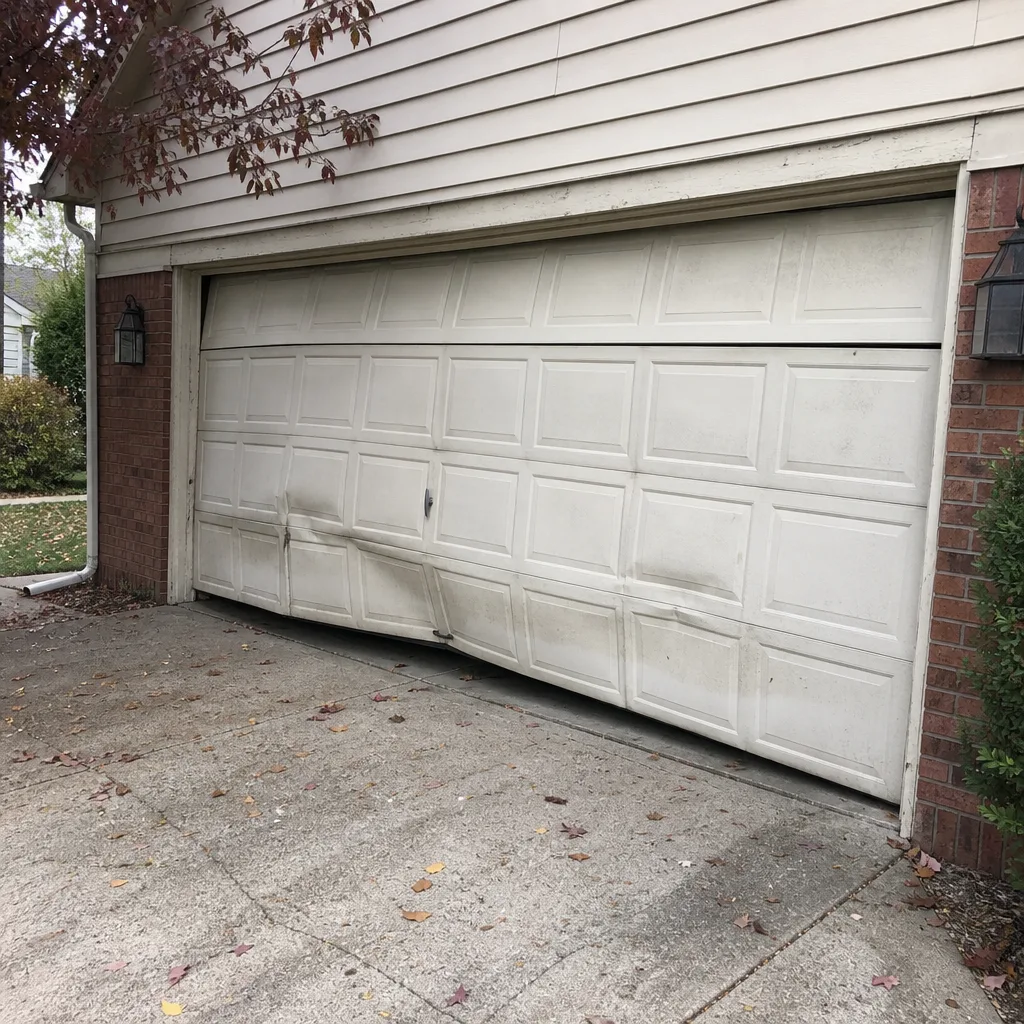
See the difference
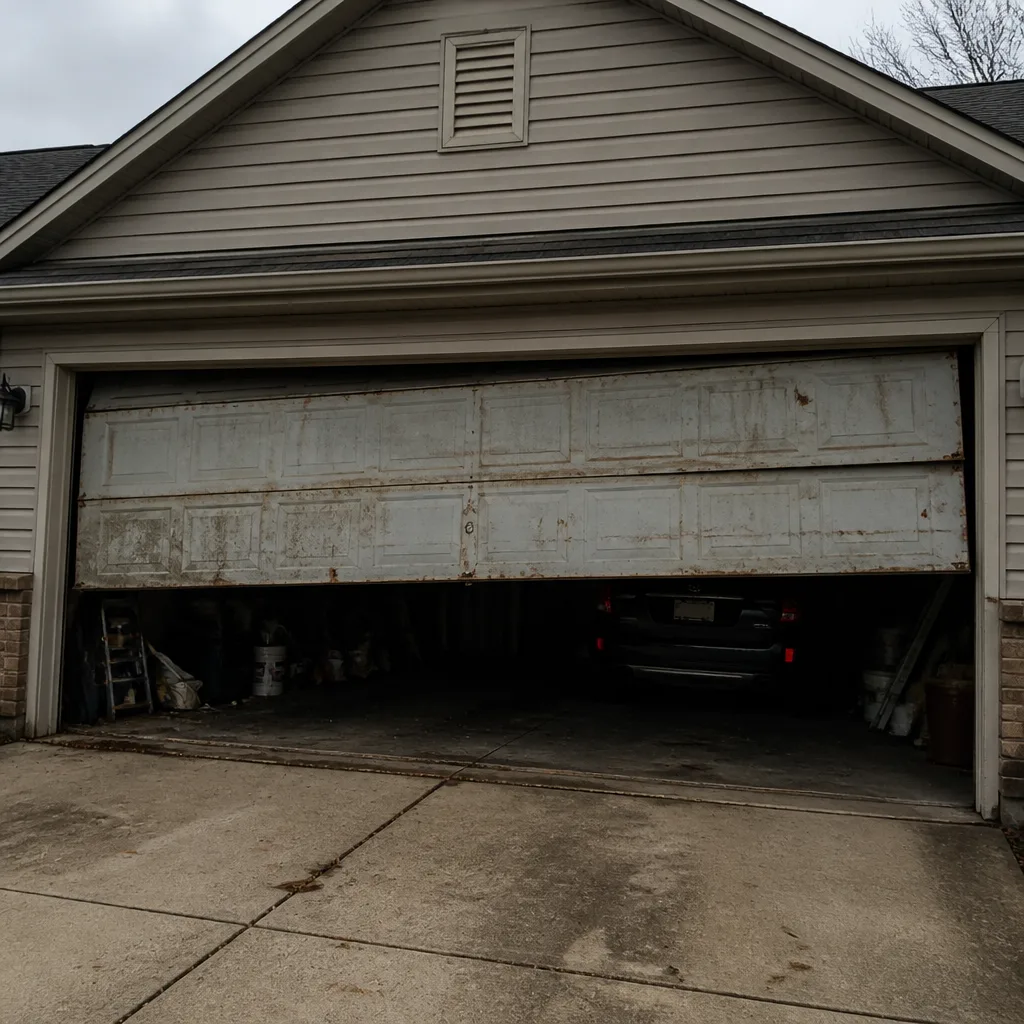 Before
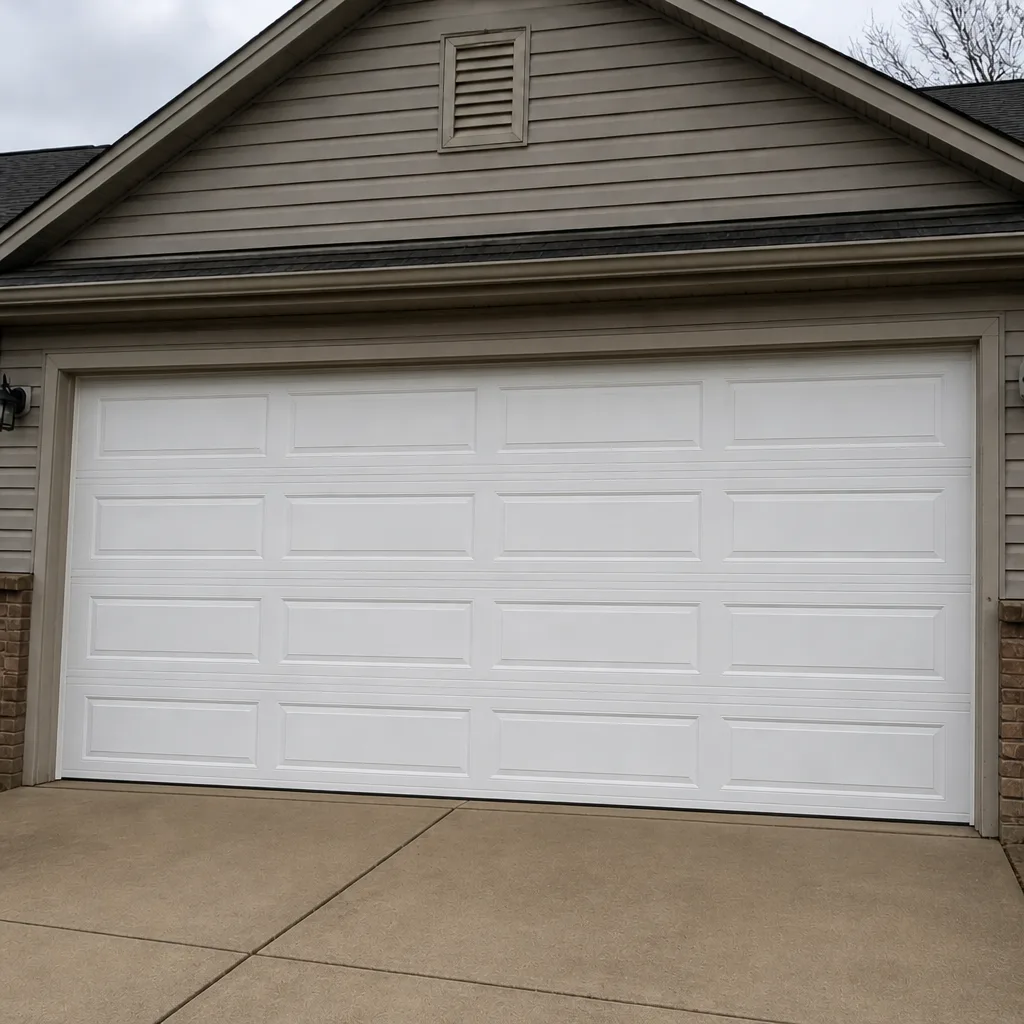 After
 Before
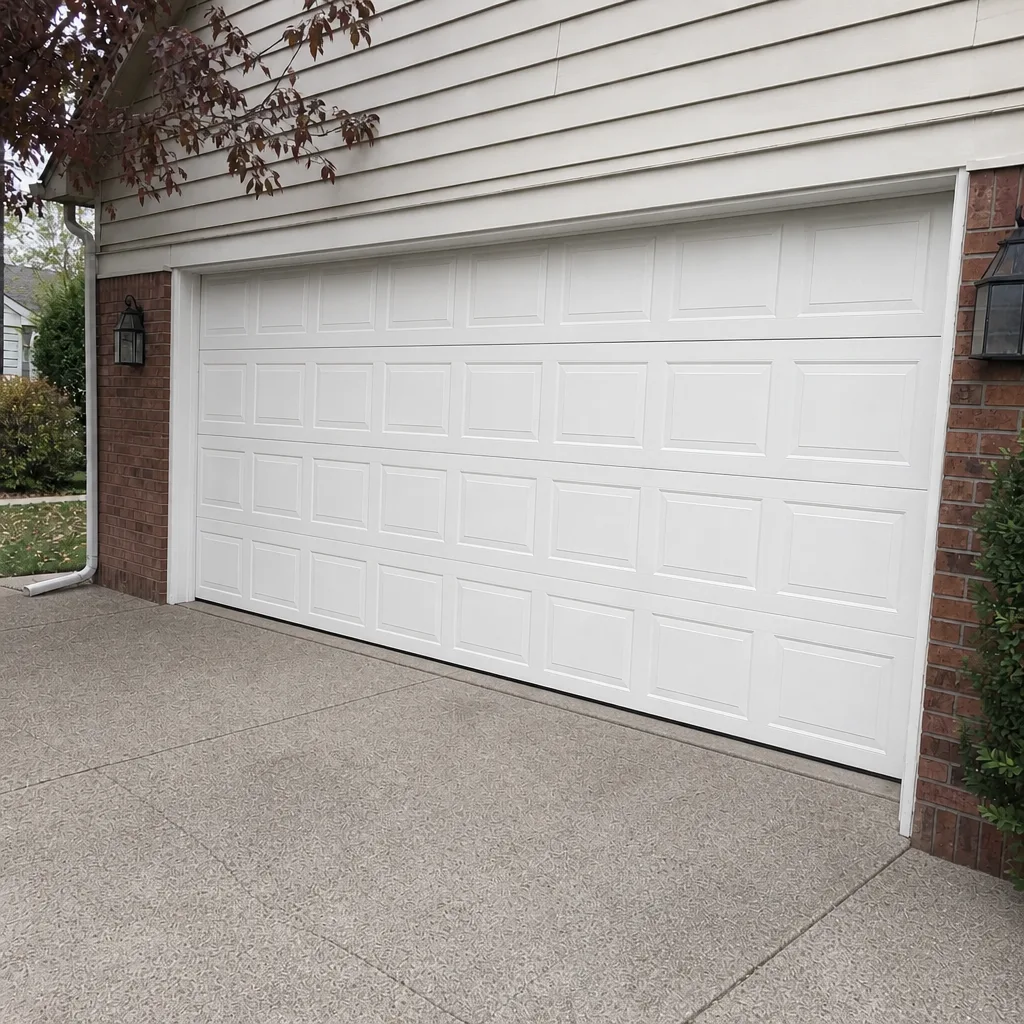 After
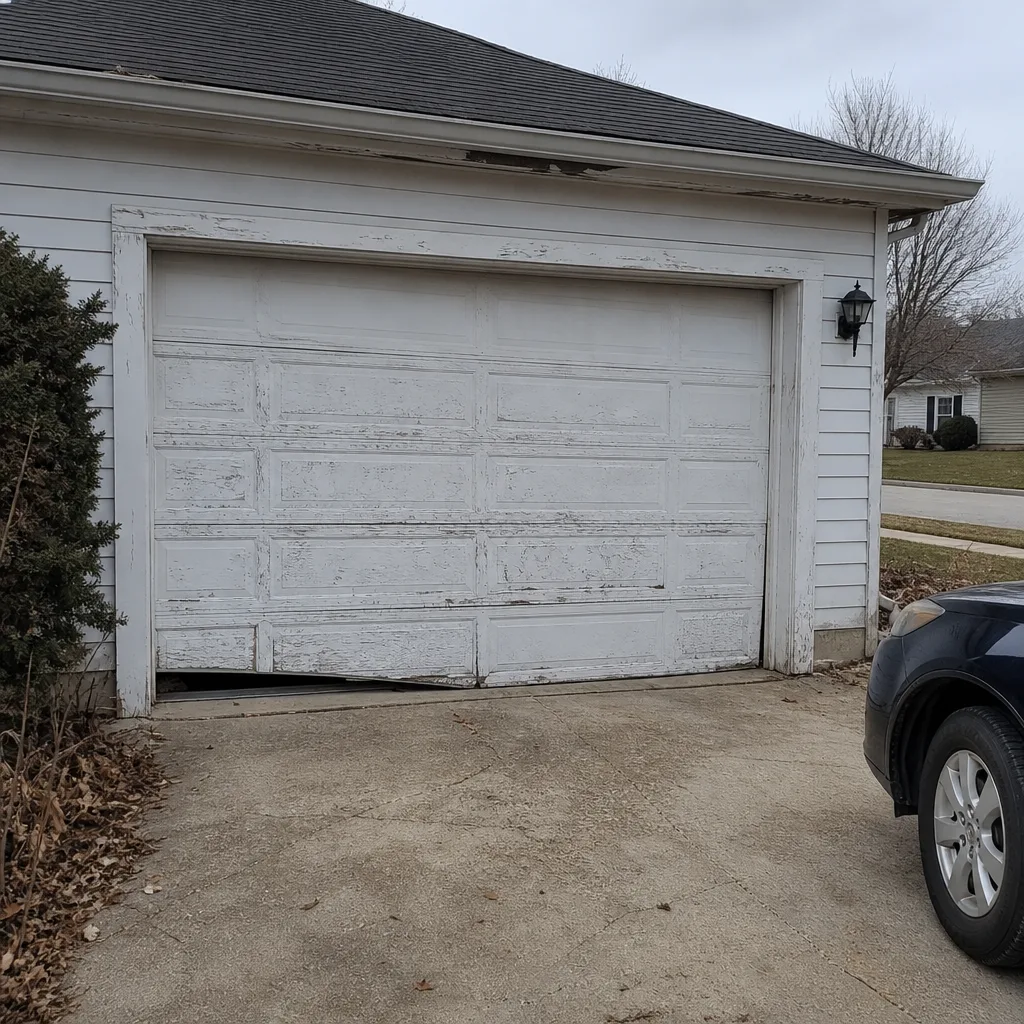 Before
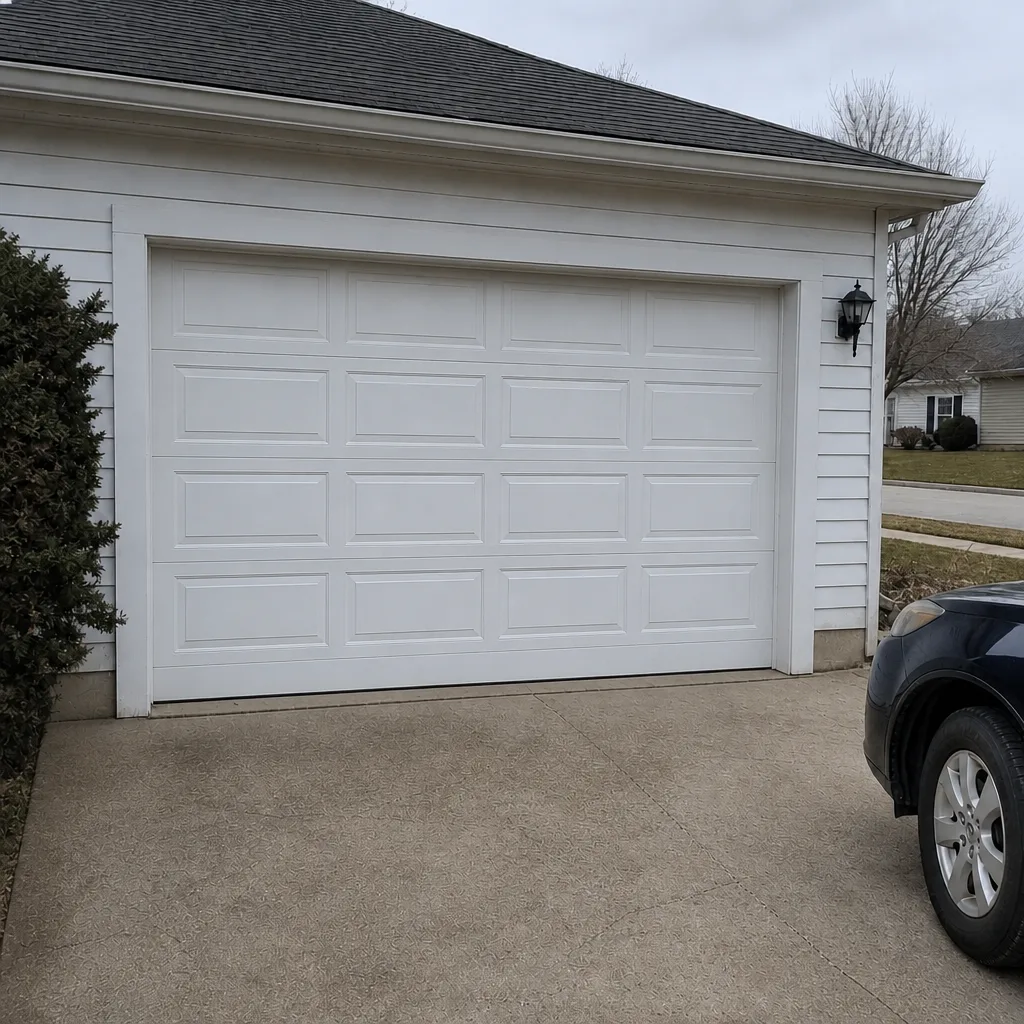 After
When to Call a Professional
Call a professional when a spring has snapped, a cable has come off its drum, the door has jumped its tracks, or the opener motor runs but the door doesn’t move. Those four situations point to specific failures that get worse with time and can be dangerous in the interim. Call us also when the door won’t reverse on contact with an object, when the opener’s safety sensors won’t stay aligned, or when the door feels significantly heavier than usual to lift by hand (that points to a failing spring, not a failing motor). And call if the door has been hit by a vehicle, even if it looks fine: the panel or track damage is often hidden until the next cycle. Plainfield Garage Door Repair Experts offers free estimates in Plainfield, and we can take a look before anything gets worse. Call (866) 371-6990. We answer 24/7. Fast dispatch from 7am to 7pm, Sunday through Friday.
Frequently Asked Questions
A typical single-car door replacement in Plainfield in 2026 costs $950 to $2,200 installed, and a double-car door costs $1,600 to $3,400 installed. The written estimate sets the final price and it’s quoted before any work starts. Call (866) 371-6990 for an exact quote; estimates are free.
No. The price is quoted and agreed before any work starts. Estimates can shift only if the scope changes during the visit, such as discovering a damaged track or a failing opener that wasn’t visible in the initial assessment. In that case we stop, explain the change, and confirm the new price with you before proceeding. Call (866) 371-6990 for an exact quote.
One torsion spring typically costs $180 to $340 to replace, and a matched pair (which is usually replaced together) lands around $360 to $680. Extension spring pairs run $120 to $260. Springs are the highest-risk component in the system, so a trained technician with the right tools should always handle the job. Call (866) 371-6990 for an exact quote.
The local professionals we connect you with are licensed and insured as their state requires. Our technicians have up to 10 years of experience and are trained across the eight brands we work on, including LiftMaster, Chamberlain, Genie, Clopay, Amarr, Wayne Dalton, Craftsman, and Raynor. Call (866) 371-6990 for an exact quote.
Repair is usually the right call unless the total repair cost plus expected near-term repairs exceeds about half of the cost of a replacement. A door that’s 5 to 8 years old and needs a spring is clearly a repair. A door that’s 20 years old and needs springs, panels, and an opener is usually a replacement. Call (866) 371-6990 to talk through which side you’re on; estimates are free.
We treat a failed door as a safety and security issue, so same-day service is available for urgent failures when the schedule allows. Call (866) 371-6990. We answer 24/7. Fast dispatch from 7am to 7pm, Sunday through Friday. If the door is stuck open and the garage is exposed, or a vehicle is trapped inside, tell the person who answers: those get moved to the front of the queue.
The Bottom Line
Garage door costs in Plainfield in 2026 come down to four numbers: the door you actually need, the insulation R-value that matches your garage, the opener that fits your door’s weight, and the labor that reflects the crew size Plainfield jobs require. Repair jobs land between $150 and $650. Replacements land between $950 and $3,400 installed depending on door size and specification. The variation between quotes is usually a specification difference, not a pricing failure. Read the line items, match the R-value and the opener class, ask for the model number, and confirm the price is quoted before work starts. That’s the whole exercise. If a contractor can’t walk through any of those four numbers with you, that’s a signal about the quote, not about you.
From a snapped spring to a full new installation, we handle the complete job: springs, openers, repair, and new doors, across the eight brands already in Plainfield garages. Call (866) 371-6990 for a free estimate. We answer 24/7. Fast dispatch from 7am to 7pm, Sunday through Friday.
Written by the team at Plainfield Garage Door Repair Experts.