
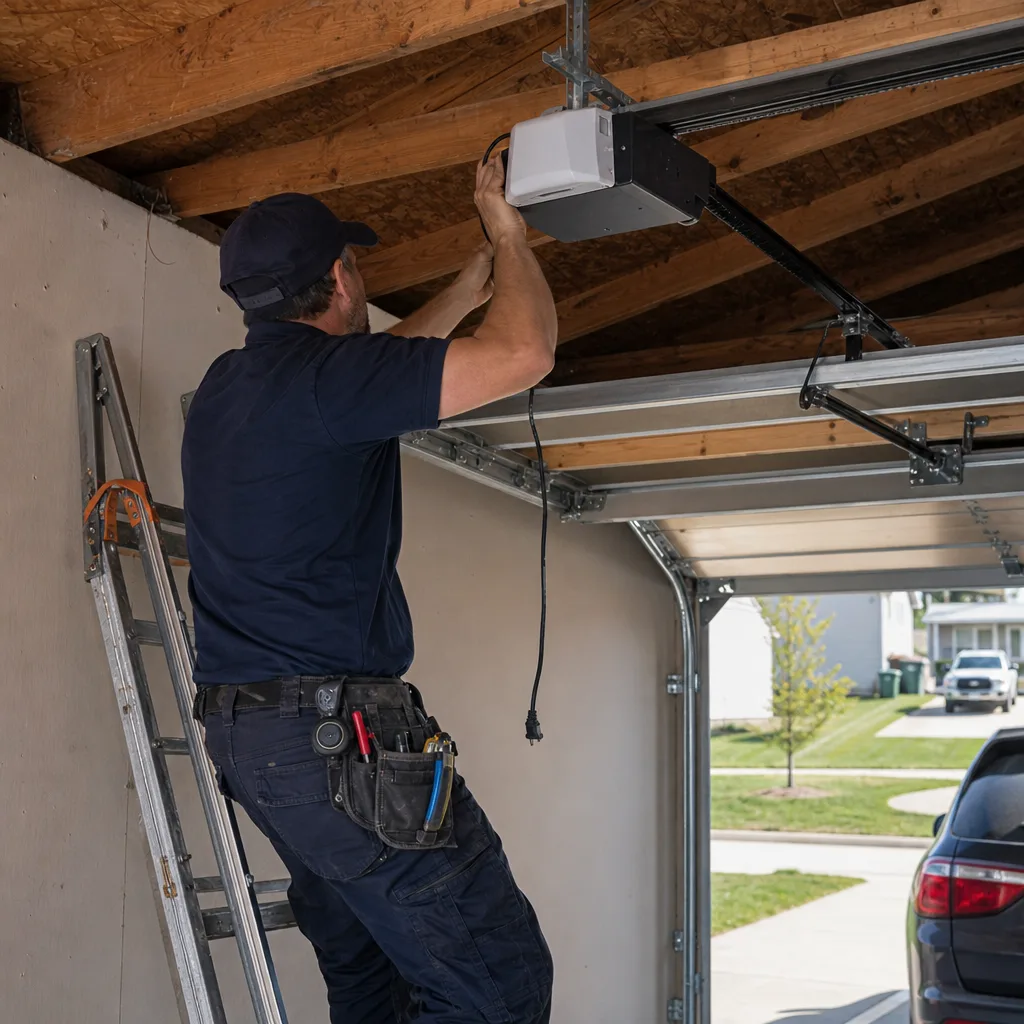
Last updated November 22, 2026
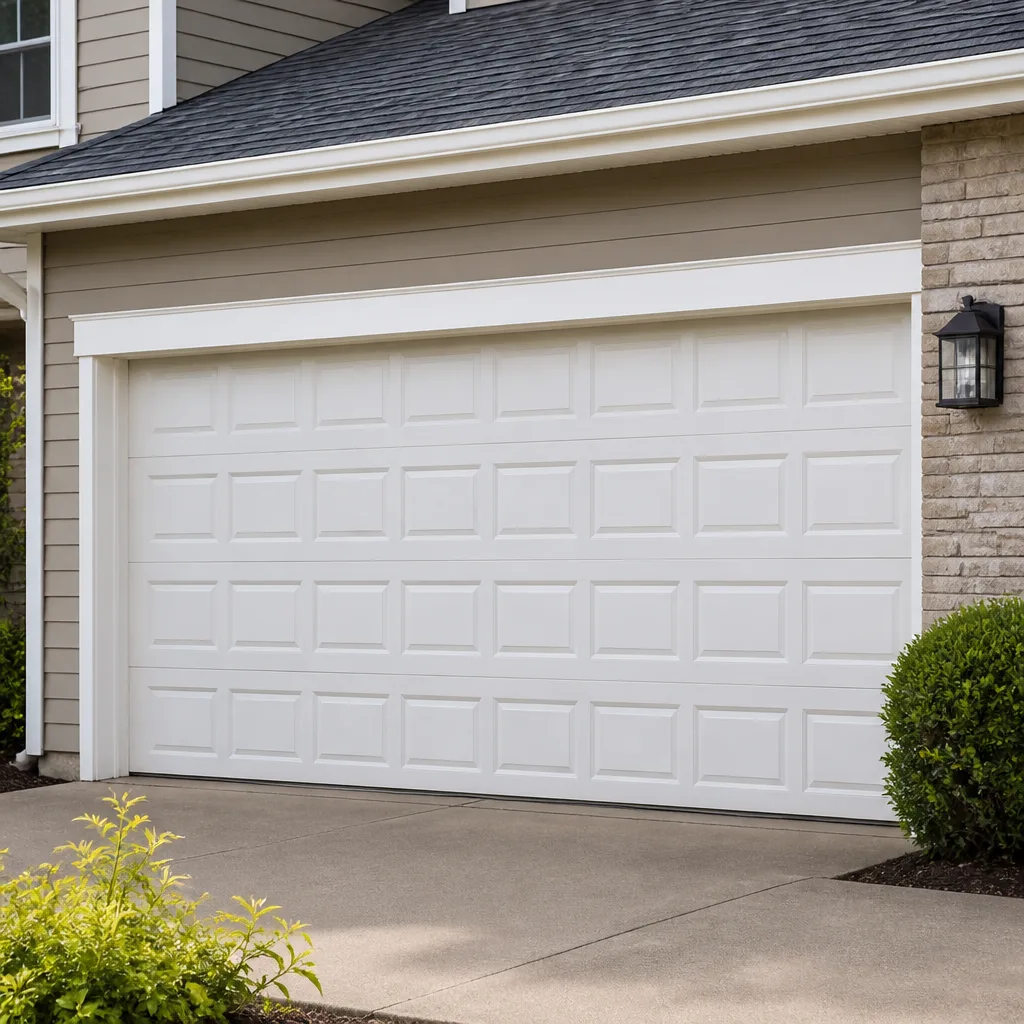 Raised-panel steel
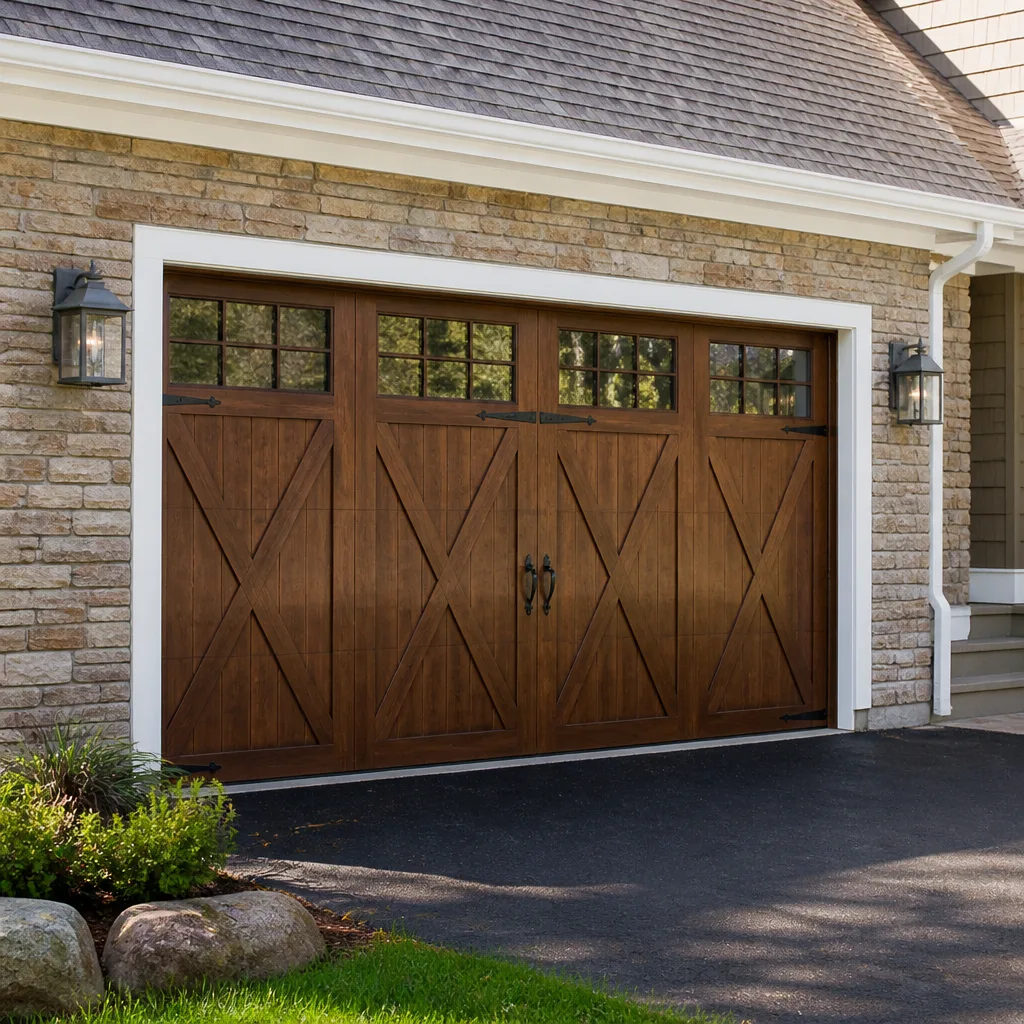 Carriage house
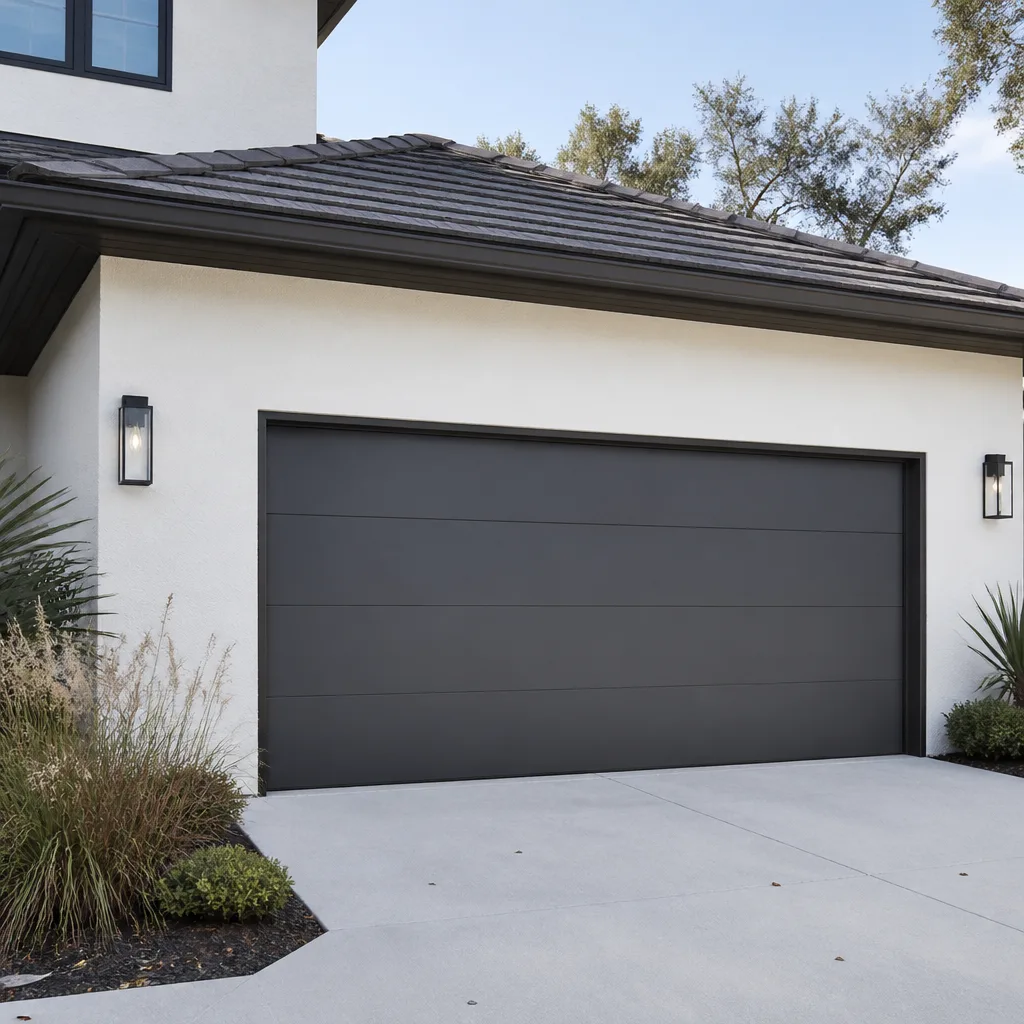 Modern flush
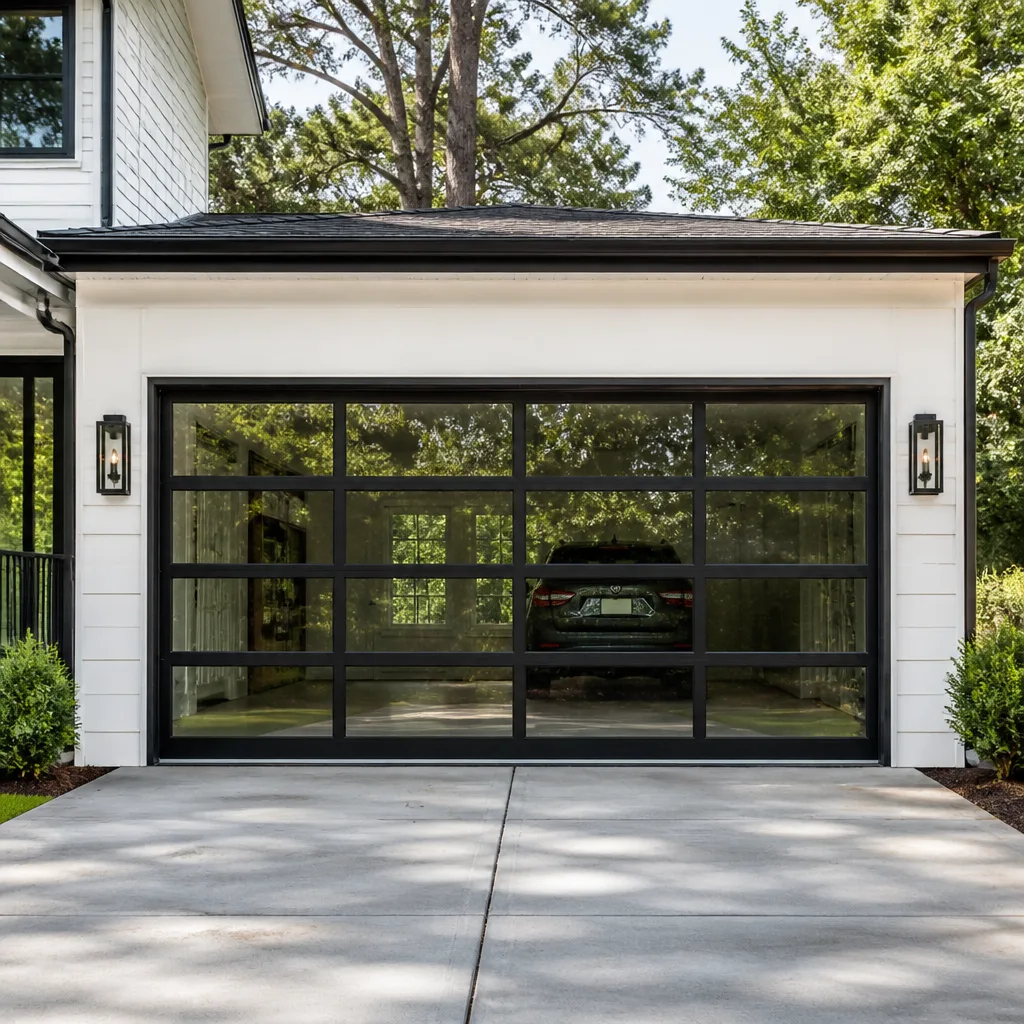 Full-view glass
 LiftMaster openers
 Chamberlain openers
Full 25-point door and opener safety check with every visit - springs, cables, rollers, tracks, and your LiftMaster or Chamberlain opener included
You get a price before we start. It does not change when the pro arrives.
Get your free estimateDIY vs Professional Garage Door: The Plainfield Homeowner’s Decision Guide
Torsion springs store enough energy to throw a grown adult across a garage floor when one fails under tension. They also show up in online tutorials filed under “beginner.” That gap between how dangerous a job actually is and how easy it looks on a screen is where people get hurt. In our experience, the homeowner who ends up with a jammed door, a bent track, or a bad injury almost never lacked confidence. They lacked the one piece of information that mattered: whether that particular task belongs in the same category as changing a light bulb or not. This guide draws that line precisely for Plainfield homes, task by task, so you know what’s safe to try and what isn’t.
Quick Answer
Most garage door problems fall into two clear buckets. Springs, cables, and anything involving the counterbalance system are professional-only because a mistake can cause serious injury. Adjustments, lubrication, sensor alignment, and most opener remote issues are safe to handle yourself. Everything in between comes down to whether you can see the failure clearly and can stop without forcing anything. When in doubt, don’t guess on the door’s tension parts. Call a specialist.
Styles & brands we work with
- Raised-panel steel
- Carriage house
- Modern flush
- Full-view glass
- LiftMaster openers
- Chamberlain openers
Table of Contents
- The Task-Level Matrix: DIY-Safe, DIY-With-Caution, Professional-Only
- What DIY Mistakes Actually Cost: The Downstream Damage
- Opener Brands, Diagnostic Apps, and When Self-Troubleshooting Works
- How Indiana Homeowner’s Insurance Treats DIY Garage Door Damage
- Three Tasks You Think Need a Pro (and Three You Think Don’t)
- Why Plainfield Homes Present Particular Garage Door Challenges
- A Step-by-Step Process for Deciding in the Moment
- When to Stop and Call
The Task-Level Matrix: DIY-Safe, DIY-With-Caution, Professional-Only
The useful question isn’t “can I do this?” It’s “if this goes wrong, what happens?” Some garage door tasks fail safely. You waste an hour and try again. Others fail with a snap and a flying piece of steel, or with a door that comes off its tracks and lands wrong. The matrix below sorts every common task by which kind of failure it carries.
DIY-Safe: You Can Do These
- Lubricating hinges, rollers, and the track – a light application of a proper garage door lubricant keeps everything moving without stress on the springs.
- Aligning and cleaning safety sensors – if the door reverses or won’t close, a dust-covered or knocked-out-of-line sensor is the most common cause, and you can fix it with a soft cloth and a careful adjustment.
- Replacing opener remote batteries and re-pairing remotes – this is a manual-and-app job for most modern openers.
- Testing the door’s balance and reversing function – the monthly checks recommended in every owner’s manual are safe, and they tell you when something needs attention.
- Tightening visible loose bolts and screws on the door panels and brackets – with the door fully closed and no tension adjustments involved, snugging hardware is fine.
DIY-With-Caution: Proceed Only If You Understand the Risk
- Replacing rollers – doable with the door down and no tension involved, but if the door is older or the rollers are worn unevenly, a pro will likely spot a related issue.
- Adjusting opener force or travel limits – worse settings can cause the door to hit and reverse incorrectly, which risks the door itself.
- Replacing weatherstripping along the bottom seal – simple on the surface, but a misaligned seal lets in water, and in Indiana’s freeze-thaw winters that becomes a track issue.
- Resetting a tripped opener after a power surge – safe if you follow the manual, risky if you start pressing buttons without understanding the cycle.
Professional-Only: Do Not Attempt
- Torsion spring replacement or adjustment – this is the single most dangerous task in the system. A winding bar slip or a misjudged turn can be violent. Springs are the highest-risk component, and they’re why garage door spring repair is treated as its own service rather than a generic repair.
- Cable replacement – cables are under the spring’s stored energy and can whip loose when tension releases.
- Track realignment after the door has come off the rails – a bent or sprung track under a heavy door needs to be corrected while the door is controlled.
- Replacing hinges on a high-tension door – the hinge may look like hardware, but it holds a panel in place under spring load.
- Any opener work involving the motor, capacitor, or circuit board – electrical risk and the chance of a false “fix” that burns out the control board.
The pattern behind that list is simple: if the part is holding or releasing the door’s weight, the task belongs to a trained technician with the right tools. If it’s control or comfort, it’s yours.
What DIY Mistakes Actually Cost: The Downstream Damage
A common assumption is that a DIY mistake costs you a replacement part. In practice, the part is the cheap part of the story. When a garage door fails out of alignment, the door itself becomes the casualty. That’s where the real money goes.
Here’s how one misstep propagates through the system:
- The immediate failure. A roller changed wrong, a sensor taped into place, a force setting turned up to “make it work.” The door now operates out of balance.
- The rail and track take the load. An unbalanced door pulls unevenly on the track. Mild bends appear at first, and then the door starts to bind.
- The panels flex. A door forced against a bent track doesn’t just bend the track. It puts torque on the panels, and over weeks the panel seams can crack or the sections can distort.
- The opener strains. The motor compensates for a door that no longer moves freely. A LiftMaster or Chamberlain unit will run hot trying, and eventually the gear, capacitor, or control board gives out – often months later.
- What used to be a small fix becomes a multi-part repair. In our experience, that’s the point most homeowners call, and the bill reflects the door, the track, and the opener instead of one component.
The pattern matters because it tells you where to stop. If you can see the failure clearly – a sensor knocked askew, a battery dead, a hinge dry – the fix stays contained. If the task involves hidden tension or the door’s balance, the consequences run the length of the system. If you’re unsure whether a small job has already spread, a professional diagnosis is the fastest way to find out before it costs more. That’s the reasoning behind our garage door repair work: find the real fault at every layer, not just the visible one.
Opener Brands, Diagnostic Apps, and When Self-Troubleshooting Works
Opener brands have diverged sharply in how much they let you troubleshoot yourself, and knowing which system you own changes whether an app will actually help.
- LiftMaster and Chamberlain – both sit in the modern app-connected world. Their smartphone apps can show error codes, run status checks, and let you operate and reset the door remotely. When the opener is the problem, the code you see in the app is often enough to tell you whether it’s a sensor issue (which you can fix) or a motor/circuit issue (which you can’t).
- Genie – also offers connected control, but the depth of the diagnostic readout varies by model year. Some units show clear error codes; older ones show only a light pattern.
- Clopay doors with integrated opener systems – the door manufacturer and the opener are separate, so door-side issues (balance, alignment) don’t always show up as digital codes. Those need eyes on the door.
- Craftsman, Wayne Dalton, and Raynor openers – these frequently need a proprietary tool or a technician’s meter to read error states accurately. The light pattern blinks, but the manual’s chart is often incomplete.
The practical rule: if your app shows a specific error code and the code maps to “sensor,” “battery,” or “remote not paired,” you can usually fix it. If the code maps to the motor, logic board, or travel/force calibration, that’s a professional task. Even with a good app, some real faults – a spring that’s weakened, a track that’s bent a millimeter – never appear as a code, because the opener is only reading its own system, not the door’s.
For that reason, when we handle garage door opener repair, we check the door first. Nine times out of ten a “dead opener” is a door that stopped moving freely.
How Indiana Homeowner’s Insurance Treats DIY Garage Door Damage
Most homeowners assume their policy covers the garage either way. The fine print usually says otherwise. Standard Indiana homeowner’s policies generally cover sudden damage to the structure – including the garage and its door – from specific perils like wind, hail, falling objects, or fire. They typically do not cover damage that results from your own faulty workmanship or lack of maintenance. In plain terms: if the door fails because you attempted a spring replacement, a track adjustment, or an opener repair, the resulting damage is far more likely to be excluded than covered.
Here are the specific language points worth checking in your own policy, because the wording varies by carrier:
- Faulty workmanship exclusion – this is the one most commonly used to deny a claim involving a DIY repair. Read it carefully.
- Maintenance exclusion – a door that failed because worn rollers or a weak spring were never addressed is often treated as a maintenance issue, not a sudden event.
- Peril-specific coverage – wind and impact damage from a storm is typically covered; damage caused by incorrect installation isn’t.
- Liability vs. property coverage – if a malfunctioning door injures someone or damages a car, liability coverage may or may not apply, and the circumstances matter.
This doesn’t mean “don’t touch your door.” It means the cost of a DIY mistake isn’t just the replacement part and the professional repair. It’s the real possibility that your policy declines to pick up the tab. Before you start a job that carries real consequences, decide whether you’re willing to absorb the whole cost yourself. If the answer is no, that’s your signal.
Three Tasks You Think Need a Pro (and Three You Think Don’t)
Three Tasks You Can Probably Handle
- Re-lubricating a noisy door. The squeal and grind most homeowners blame on springs is usually dry hinges and rollers. A proper garage-door lubricant on the moving points (not a general-purpose household oil) quiets it. It’s the highest-return thing you can do yourself.
- Realigning safety sensors. If the door reverses or won’t close for no apparent reason, look at the two sensors at the bottom of the tracks. If one is knocked out of line or covered in debris, cleaning and aligning it usually fixes it in under ten minutes.
- Pairing a new remote. Most LiftMaster, Chamberlain, and Genie openers pair a remote in a minute or two from the manual or the app. It’s not a service call, and we’d rather you try it first.
Three Tasks Homeowners Think Are Safe (They Aren’t)
- Winding a torsion spring yourself. This is the single biggest risk on the whole door. The tutorials make it look like a mechanical puzzle. The stored energy in a wound spring can release instantly, and the tools involved can slip. This is professional-only, full stop.
- Replacing opener gears or capacitors. These are electrical components inside a housing that holds a motor under load. Even a “simple” capacitor replacement carries shock risk and the chance of a false fix that damages the control board.
- Prying a door back onto its tracks after it’s off. A door off its tracks is under the full push of its spring system. Forcing it can release that force, damage panels, or bring the door down. If it’s off the track, stop and close the area. That’s a professional scenario.
Notice that the DIY-safe tasks are all small, low-torque, and don’t hold tension. The professional-only tasks are all about controlling the door’s weight. Between the two there is a gray zone, and the honest answer in the gray zone is to ask before you turn a wrench. A quick call costs nothing and settles the question.
Why Plainfield Homes Present Particular Garage Door Challenges
Plainfield sits in Hendricks County, west of Indianapolis, and the climate and housing here shape garage door problems in ways a generic national guide won’t tell you. Winters bring freeze-thaw cycles that punish the bottom seal and the track at the base of the door. A small gap in the weatherstripping lets meltwater in, that water freezes, and the ice shifts the track or stresses a panel. In our experience, the busiest weeks for bent-track calls come right after a hard cold snap, not after a storm.
The housing stock matters too. Plainfield includes established neighborhoods and newer subdivisions, and the doors reflect that. Older homes often have doors with weathered rollers and aging springs; newer subdivisions tend to run modern opener systems where the door is fine but the electronics act up. That spread is one reason a specialist who knows the range of brands on local doors matters. We work on LiftMaster, Chamberlain, Genie, Clopay, Amarr, Wayne Dalton, Craftsman, and Raynor precisely because they’re the systems we actually see on Plainfield doors – and we service the door and the opener together, so a diagnosis doesn’t stop at one layer.
There’s also the safety angle specific to winter. A door that binds in the cold is a door that’s asking its opener to work harder. That’s when motors burn out and springs fail. In Plainfield, the smart move in late fall is to have the door checked for balance and lubrication before the cold hits, when it’s a small job, rather than in January when it’s an emergency. Our Plainfield garage door repair experts handle both, and a free estimate lets you know whether your door is heading for trouble.
A Step-by-Step Process for Deciding in the Moment
When something goes wrong with your door, you don’t need to run through this whole guide. You need a workable sequence. Here’s the one we’d give any homeowner:
- Stop the door. If it’s acting strangely, unplug the opener or pull the manual release (only with the door fully down, and only if you’re confident it’s not under spring load). Don’t keep running it hoping the problem clears.
- Identify what’s actually wrong. Look at where the door is, what part failed, and what the opener is doing. A dead door and a dead opener are different problems.
- Sort the fault using the matrix above. Sensors, remotes, lubrication, and visible bolts: yours. Tension parts, cables, tracks, motor and circuit board: professional.
- Check your owner’s manual and your opener’s app. For LiftMaster, Chamberlain, or Genie, the app may give you a code that settles whether the fix is small.
- If the fault is in the gray zone, park it and call. A door that’s partly broken and partly working is the most dangerous state. Don’t force it.
- Get a written price before work starts. Any reputable professional will quote the job and agree the price with you before starting. Our written estimate sets the final price, and it’s free.
This is the difference between the DIY-vs-pro question feeling like a personality test and feeling like a decision. You only need to classify the failure, not judge yourself.
When to Call a Professional
Call when the job touches the door’s tension, weight, or the opener’s electrical components. Call when a door has come off its tracks, when a spring has visibly snapped, when the door is sagging or moving unevenly, or when an opener keeps resetting itself. Call when the door is your only access to the house, and it won’t open or close – that’s a security situation, and most homeowners don’t want the door sitting open for days. Call whenever the failure has already spread, because forcing it makes the eventual repair larger. If you’ve read this far and the task in front of you is in the gray zone, call.
Plainfield Garage Door Repair Experts offers free estimates in Plainfield. Call (866) 371-6990. We answer 24/7. Fast dispatch from 7am to 7pm, Sunday through Friday. Our technicians have up to 10 years of experience, and the price is quoted and agreed before any work starts.
See the difference
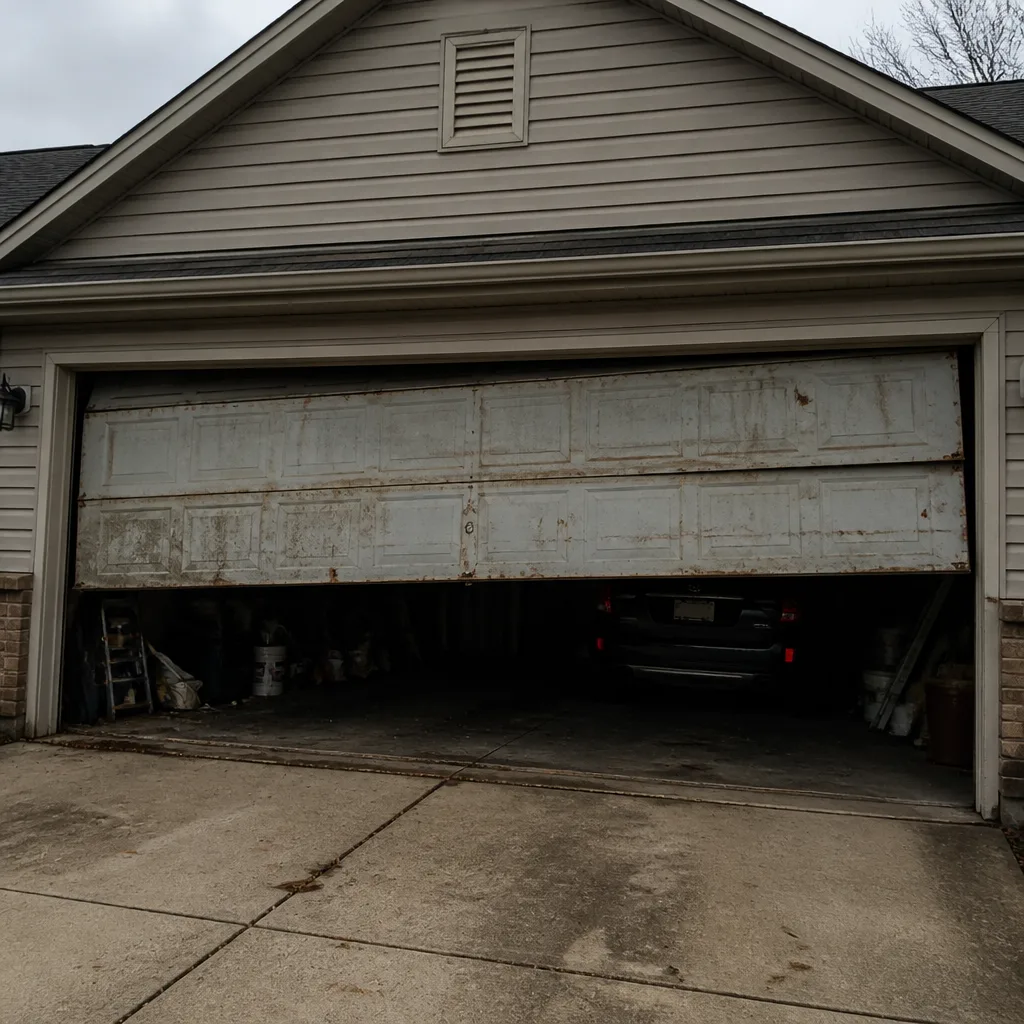 Before
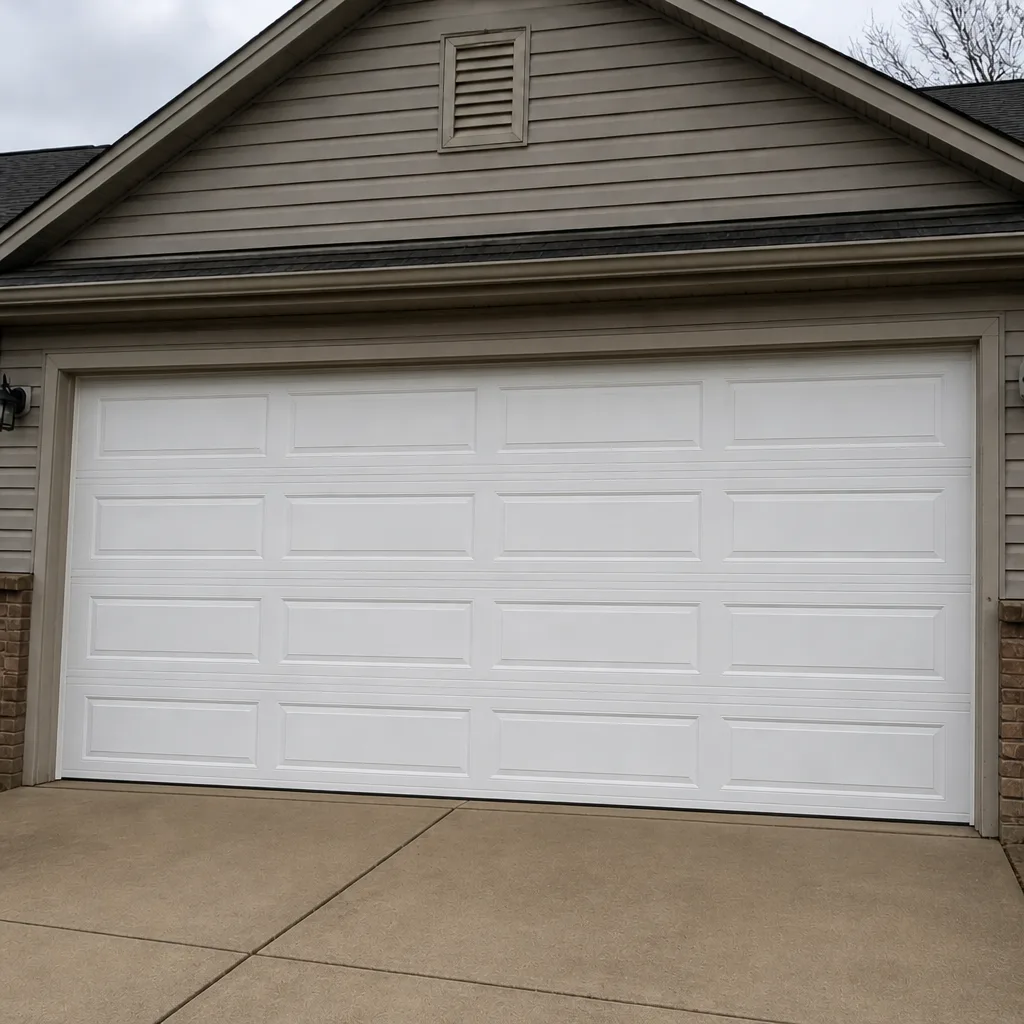 After
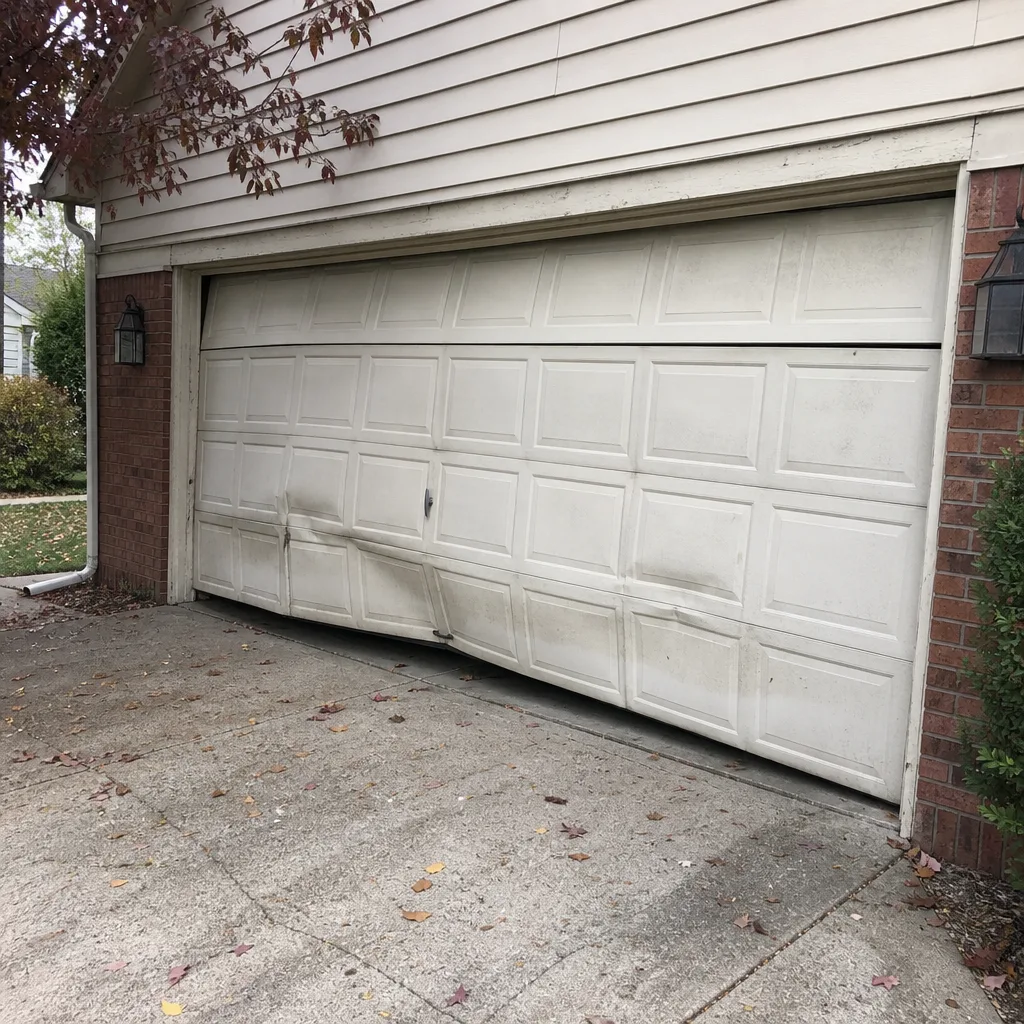 Before
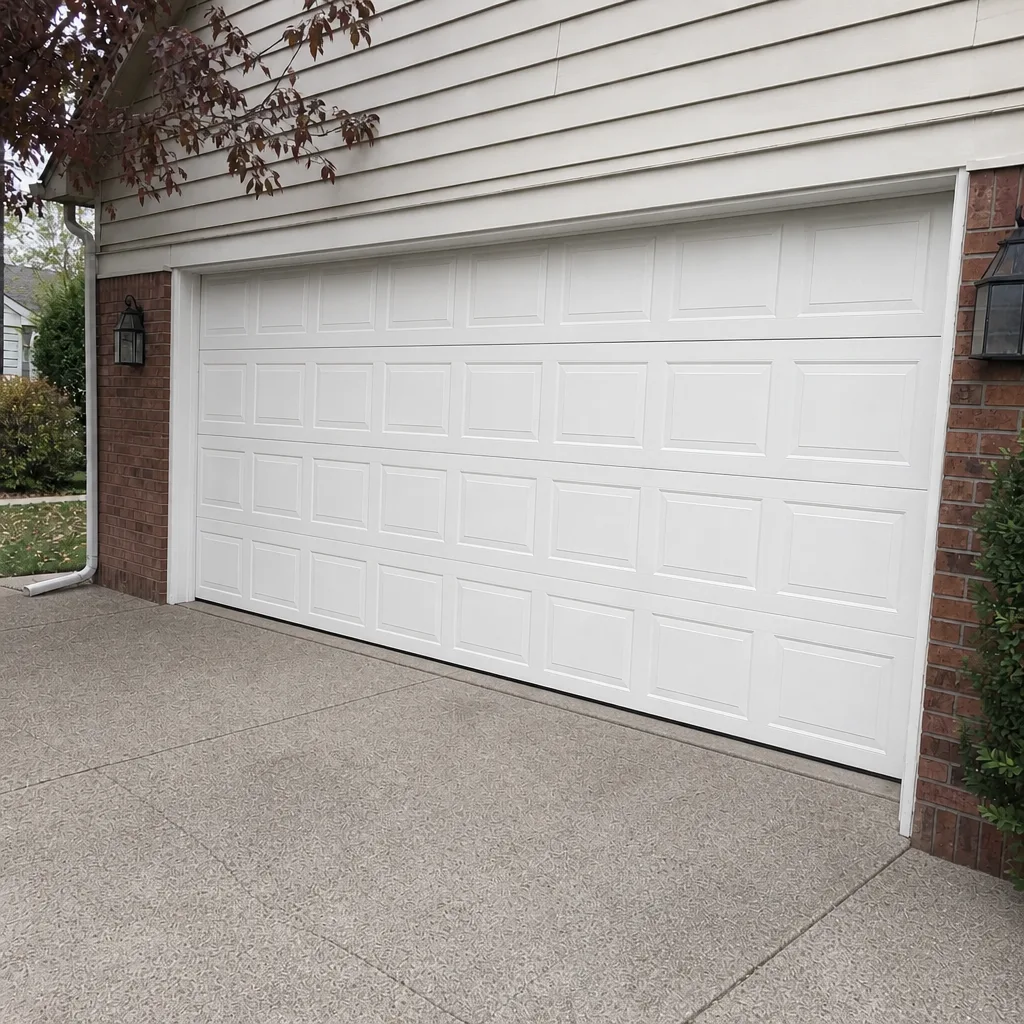 After
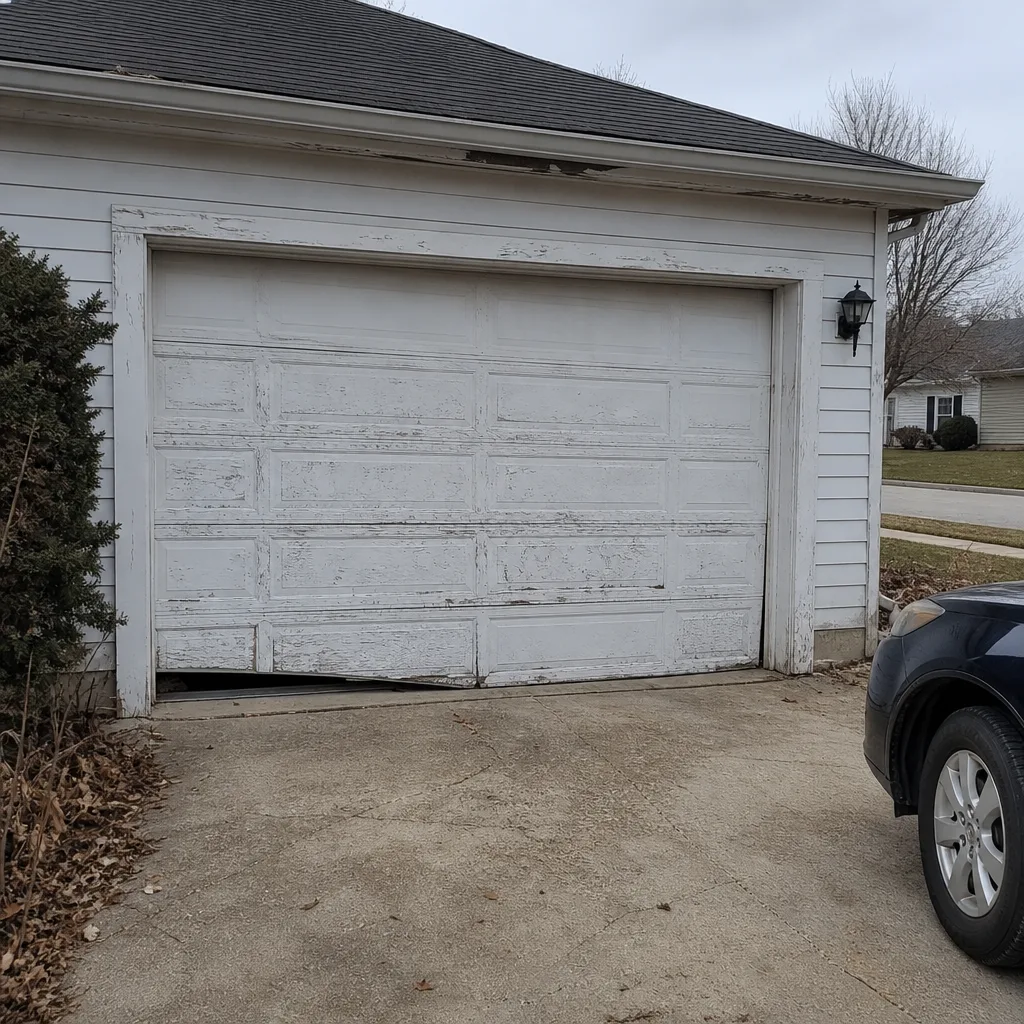 Before
 After
Common Mistakes to Avoid
- Winding a torsion spring without a winding bar and training. This is the mistake most likely to end in a serious injury. The spring can release its stored energy instantly, and no amount of video-watching changes that.
- Taping up a safety sensor instead of aligning it. A taped sensor defeats the safety reversal. It’s a common shortcut and it defeats the one feature that stops the door on a child, a pet, or a car.
- Turning up the opener’s force setting to fix a heavy door. This masks the real problem – a binding track or worn rollers – and burns out the motor sooner. LiftMaster and Chamberlain units will usually run, get hot, and fail later.
- Forcing a door back onto its tracks after it’s off. The spring is still under load. The door can come down hard. If it’s off the track, leave it and call.
- Skipping fall lubrication and balance checks in Plainfield. The freeze-thaw cycle here stresses the bottom seal and the track base. Winter problems are cheaper to prevent in autumn than to fix in January.
- Assuming the insurance will cover a DIY repair gone wrong. Most policies exclude faulty workmanship. Read the language before you start.
- Letting a “small” misalignment sit for weeks. A slightly bent track pulls the door out of square and puts continuous strain on the opener. Small misalignments grow.
Frequently Asked Questions
No. Torsion springs store enough energy to cause serious injury when they release, and that includes a slipped winding tool. Spring replacement should only be done by a trained technician with the right tools. Call (866) 371-6990 for a free estimate on spring repair.
The line falls at tension. If the part holds or releases the door’s weight – springs, cables, tracks, hinges under load – it’s professional-only. If it’s control or comfort – sensors, remotes, lubrication, visible bolts – it’s safe to do yourself. If you’re unsure where a fault falls, call and we’ll tell you honestly.
Usually not. Standard policies generally cover sudden damage from perils like wind or impact, but typically exclude damage from faulty workmanship or lack of maintenance. Check your policy’s workmanship and maintenance language, and assume a DIY failure would be your cost. Call (866) 371-6990 when you’re not sure a task is worth the risk.
Freeze-thaw cycles are the main cause. Water gets into the bottom seal or track base, freezes, and shifts the hardware. Cold also stiffens lubricant and adds strain to rollers and springs. A late-fall lubrication and balance check prevents most of it. Call (866) 371-6990 for an estimate.
No. The written estimate sets the price, and we quote and agree it with you before any work starts. If we find a hidden issue while working, we stop and talk it through. The estimate is free, so call (866) 371-6990 for an exact quote.
The local professionals we connect you with are licensed and insured as the state requires. They’re trained on the eight brands most common on Plainfield doors, including LiftMaster, Chamberlain, Genie, Clopay, Amarr, Wayne Dalton, Craftsman, and Raynor. Call (866) 371-6990 to book.
The Bottom Line
The DIY-vs-professional question isn’t about whether you’re handy. It’s about what a mistake costs. Sensors, remotes, lubrication, and visible hardware are yours, and doing them saves you time. Springs, cables, tracks, hinges under load, and opener circuit boards belong to a trained professional with the right tools, because the cost of a mistake isn’t a part – it’s an injury, a voided warranty, or damage your insurance won’t cover. In Plainfield’s climate, small prevention in fall beats big repair in winter. When the failure is in the gray zone, stop and call. A free estimate settles the question faster than guessing does, and our technicians have up to 10 years of experience working on whatever system is on your door.
Plainfield Garage Door Repair Experts is dedicated to garage doors only. Call (866) 371-6990 for a free estimate. We answer 24/7, with fast dispatch from 7am to 7pm, Sunday through Friday.
Written by the team at Plainfield Garage Door Repair Experts.