
Last updated November 22, 2026
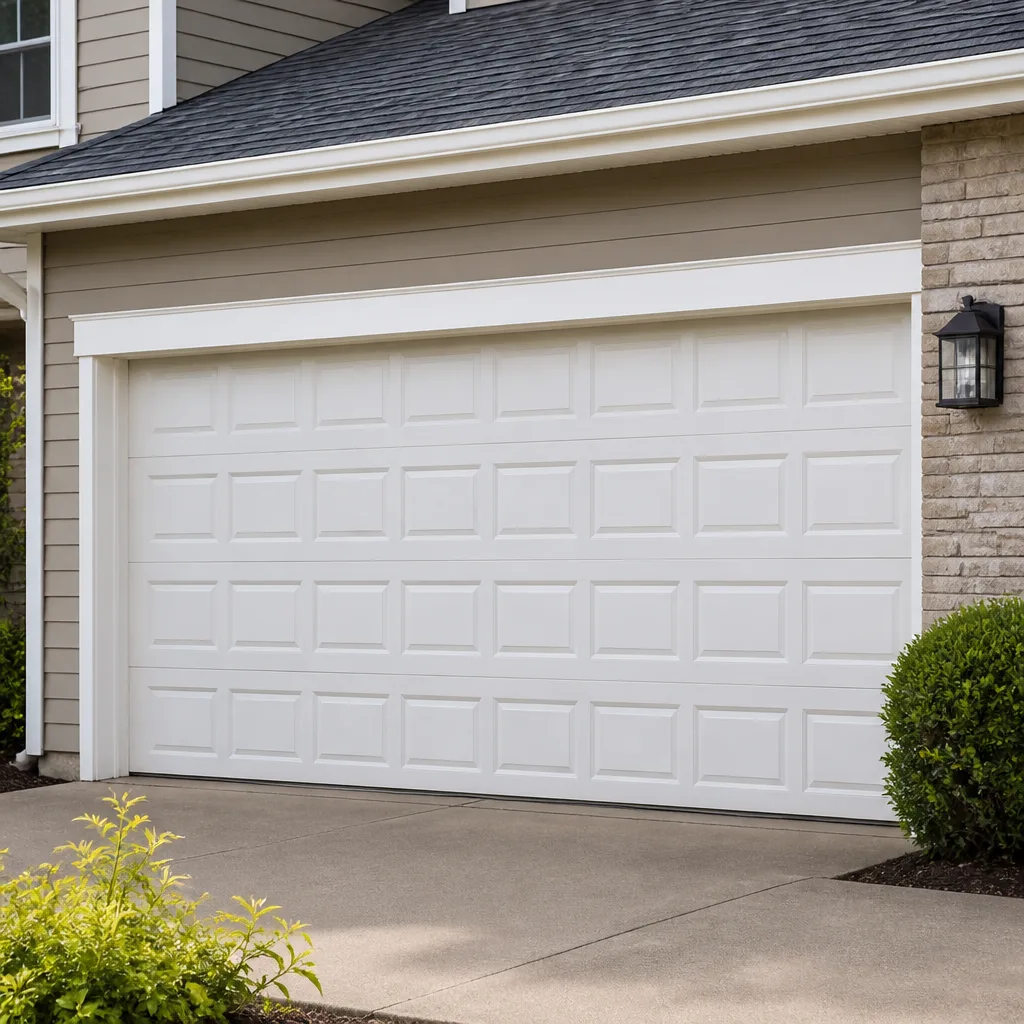 Raised-panel steel
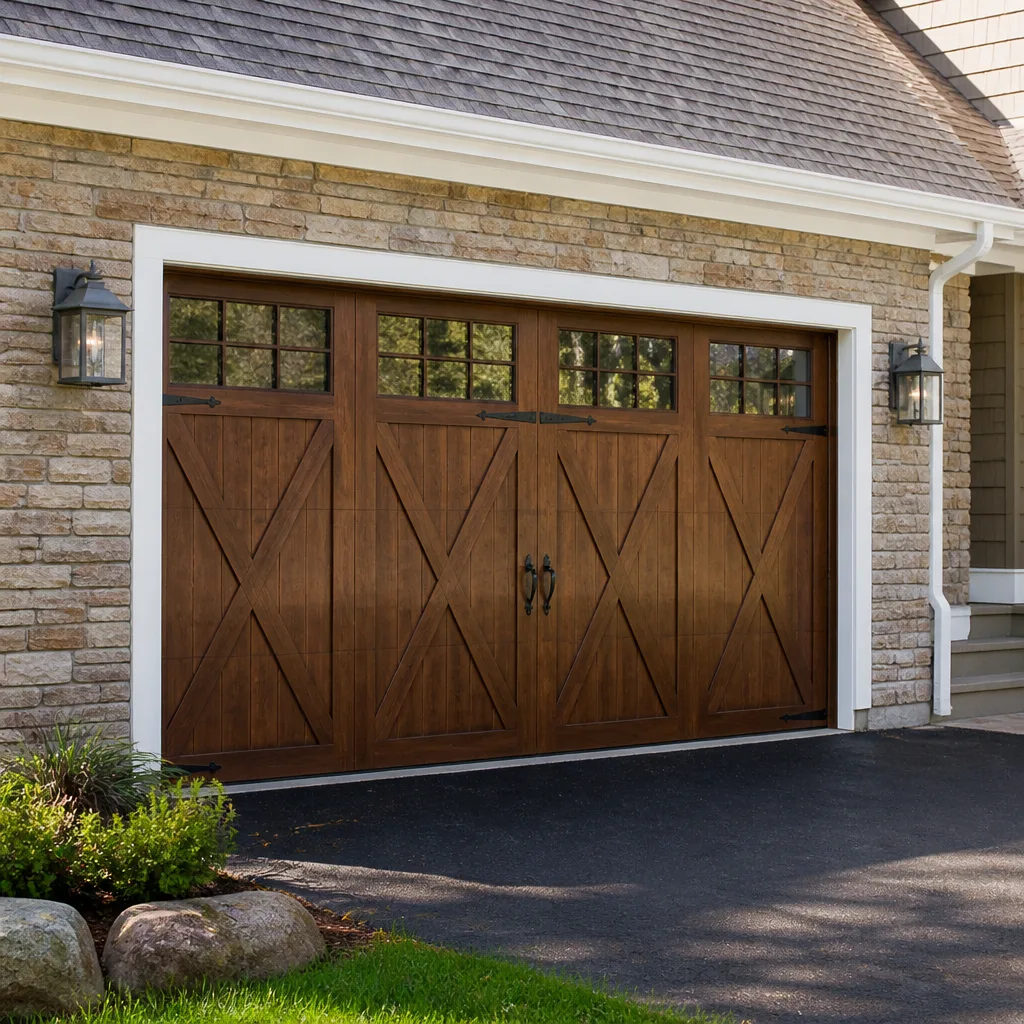 Carriage house
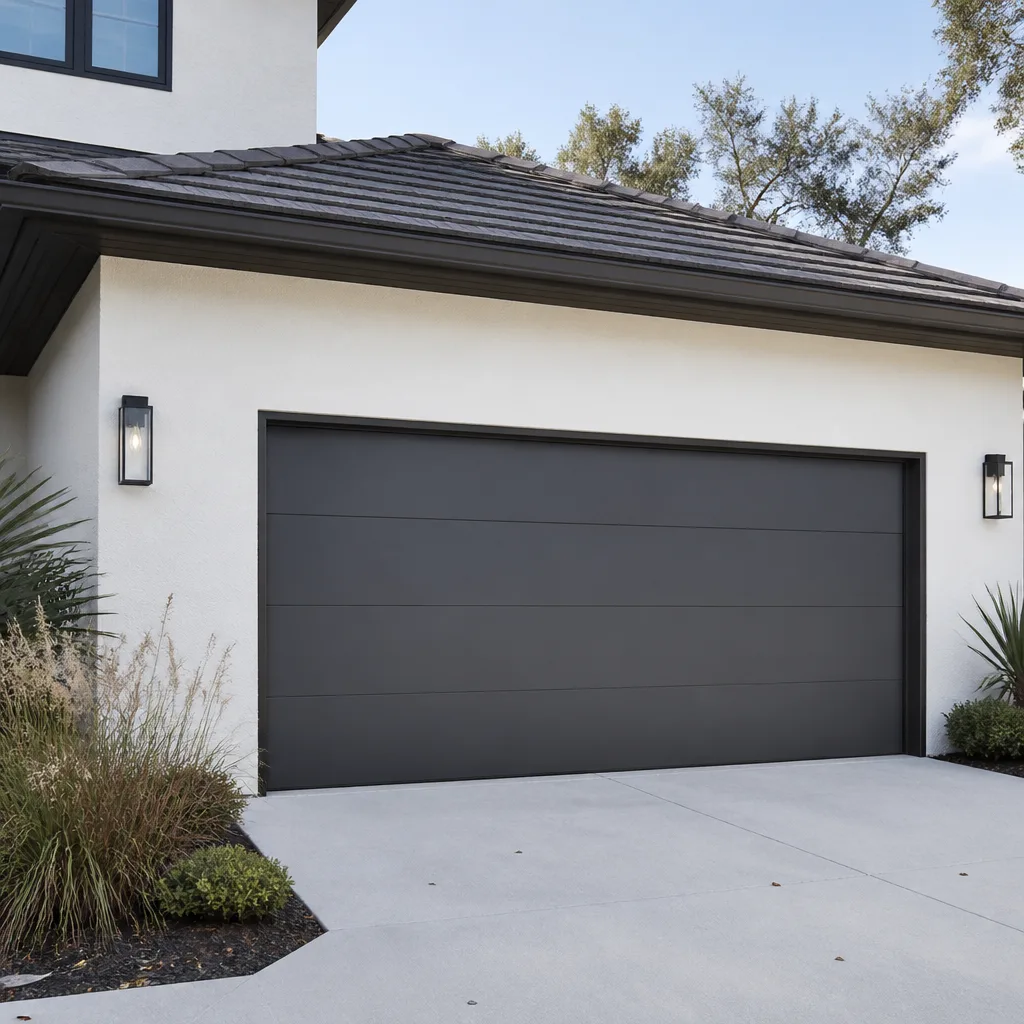 Modern flush
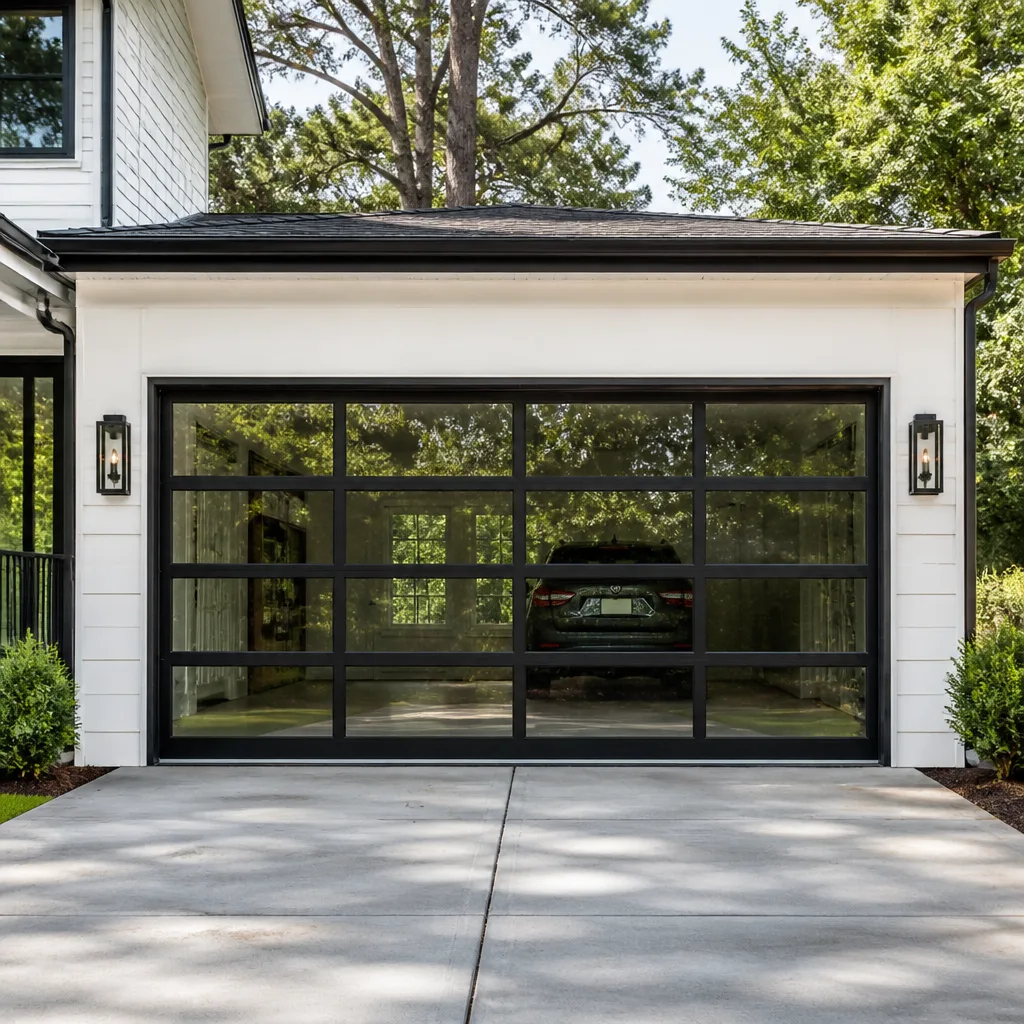 Full-view glass
 LiftMaster openers
 Chamberlain openers
Full 25-point door and opener safety check with every visit - springs, cables, rollers, tracks, and your LiftMaster or Chamberlain opener included
You get a price before we start. It does not change when the pro arrives.
Get your free estimateGarage Door Repair Maintenance Schedule: What to Do and When
Most homeowners lubricate their garage door far more often than they need to, and almost never test whether it is balanced. That’s backwards. A garage door is a machine with 12 to 15 moving parts, and each one wears at its own rate. Lubricating everything on a single spring cleaning pass while skipping the balance check leaves the part most likely to strand your car unexamined. In this guide, we lay out a maintenance calendar built around how doors actually fail in Plainfield, Indiana, with tasks staggered by season and component lifespan, so you spend less time on the door and catch real problems before they become emergencies.
Quick Answer
A garage door needs lubrication every 4 to 6 months, a 30-second balance test once a month, a hardware torque check every 6 months, and a professional inspection roughly once a year. In Plainfield’s freeze-thaw climate, the two highest-risk months for mechanical failure are March and November, so schedule your balance test and visual check just before each of those transitions.
Styles & brands we work with
- Raised-panel steel
- Carriage house
- Modern flush
- Full-view glass
- LiftMaster openers
- Chamberlain openers
Table of Contents
- Why a Single Annual Tune-Up Doesn’t Work
- The Month-by-Month Calendar for Plainfield’s Freeze-Thaw Cycle
- The 30-Second Balance Test
- Component-Specific Lubrication Guide
- Hardware Torque Check
- Building a Maintenance Log
- What Never to Touch Yourself
- Why March and November Are the Danger Months
Why a Single Annual Tune-Up Doesn’t Work
The “annual tune-up” model treats a garage door like a car engine that simply needs fresh oil once a year. Doors don’t work that way. The components in your door system age on very different timelines. A torsion spring flexes thousands of times and eventually fatigues; your nylon rollers wear slowly and quietly; the hinges, brackets and track bolts loosen from the vibration of every open and close cycle.
That difference in wear rate is why a single calendar date doesn’t protect you. By the time a yearly technician arrives, a loose bolt may have been working loose for months. A spring on the edge of failure could have been strained through an entire winter. The right approach splits tasks into three tiers based on how fast each component wears:
- Fast-wearing tasks (monthly): balance test, visual inspection of cables and springs, listening for unusual noise.
- Medium-wearing tasks (every 4 to 6 months): lubrication of moving parts, check of roller condition.
- Slow-wearing tasks (annually): full professional inspection, torque check on all brackets, opener safety-reverse test, weather seal evaluation.
Plainfield homeowners who follow this tiered approach catch small issues early. It also means you’re not paying for a full service visit when a quick visual check would do. We’ve seen doors go years without a proper balance test simply because the homeowner thought the annual tune-up covered everything. It usually doesn’t.
The Month-by-Month Calendar for Plainfield’s Freeze-Thaw Cycle
Indiana’s climate puts real stress on a garage door system. Winters bring repeated freezing and thawing, which means the metal in your tracks, springs and hinges expands and contracts several times a month. That cycling loosens bolts, stresses welds and stiffens lubricant. Here’s how to schedule maintenance around that rhythm so your door is protected before the stress peaks.
- January: Perform the 30-second balance test. Cold has stiffened the lubricant; listen for grinding or scraping. If the door feels heavy, note it and call for a professional look.
- February: Inspect the bottom weather seal for cracking or gaps. Cold air infiltration is a clear sign the seal needs replacement. Check for drafts along the base of the door.
- March: This is peak season for failures. Do a full visual inspection: springs, cables, rollers and hinges. Lubricate all moving parts as the thaw begins. Book a professional inspection if you notice anything unusual.
- April: Test the opener’s safety-reverse feature and check the photo-eye alignment. Clear any debris from the track.
- May: Check the rollers for flat spots or cracks. Nylon rollers can develop noise; steel rollers may seize. Clean the tracks with a dry cloth.
- June: Torque check on all hinge and bracket bolts. Crank each bolt snug, but don’t overtighten. This is a good month for an annual professional service visit.
- July: Lubrication pass on hinges, rollers and the spring coil. Check for rust spots on the door panels and touch up any bare metal.
- August: Balance test again as summer heat can affect torsion springs. Inspect the cables for fraying or slack.
- September: Clean and lubricate the opener’s chain or belt drive if your opener has one. Check the manual release for smooth operation.
- October: Full visual inspection ahead of cold-weather stress. Look for weatherstripping wear, gaps at the sides and bottom. Lubricate hinges and springs with a cold-weather-appropriate lubricant.
- November: Second peak failure month. Verify balance, listen for unusual noise. Schedule a professional inspection if the door has been showing any warning signs.
- December: Light lubrication on the spring coil and hinges. Test the safety reverse one more time. This is also a good moment to review your maintenance log.
This calendar assumes the door is used daily, which is normal for most Plainfield households. If your door is on a detached garage or used less often, you can stretch the lubrication interval slightly but never skip the March and November checks.
The 30-Second Balance Test
Here’s the test almost nobody runs, and it’s the single most useful maintenance check you can do. A balanced door is a safe door. It tells you whether tension in your springs is still within a safe operating range and gives you the earliest possible warning that a spring is about to fail.
Disconnect the opener by pulling the manual release cord (with the door fully open or closed, whichever is easiest on your model). Then:
- Lift the door by hand to about waist height and let go.
- A properly balanced door will hold in place, or drift slowly and evenly.
- If the door falls fast or slams down, the springs are weak or failing.
- If it wants to rise on its own, the springs are over-tensioned, which is also unsafe.
What does an out-of-balance door feel like? A weak-spring door feels heavy at the bottom and then suddenly light. You’ll also hear a light “clunk” as it settles if the tension is uneven. A properly tuned door feels the same weight through the whole travel. You almost shouldn’t notice it.
Run this test once a month in a Plainfield home, and always before March and November. If the door fails the test, don’t force it. Springs are under extreme tension and should be adjusted only by a trained technician. That’s the moment to schedule garage door spring repair rather than wait for a snap.
Component-Specific Lubrication Guide
Lubrication is the most over-performed garage door maintenance task, and it’s also the most mis-done. The wrong product on the wrong part can attract dust, gum up moving parts or wash out the correct lubricant. In a Plainfield climate with cold winters, the wrong grease thickens and makes the door harder to operate.
Here’s what to use where:
- Rollers (metal, hinges, tracks): A dedicated garage door lubricant or white lithium grease. Apply a light bead to each bearing, not the roller face. Over-lubricating the track itself attracts dirt.
- Hinges: White lithium grease or a silicone spray at the pivot points. Wipe any excess so dust doesn’t build up.
- Spring coil: A purpose-made torsion spring lubricant, sprayed lightly along the length of the coil. This is gentle and won’t attract grime. Never stand directly under the spring while applying it.
- Opener chain or belt: Follow the opener manufacturer’s specification. Genie and Chamberlain units typically call for a light chain lubricant, not a heavy grease.
- Track: Usually nothing wet. Wipe clean with a dry cloth. Lubricant in the track is a dust magnet.
WD-40 deserves a specific mention: it’s the wrong product for almost every garage door application. It’s a solvent that displaces moisture and cleans, but it’s not a durable lubricant. On rollers and hinges it evaporates and leaves parts drier than before. On the spring coil it can strip the correct lubricant. Keep WD-40 for bolts, not for moving door parts.
If you’re unsure what’s on your door or your system is a Clopay or Amarr door with a specific factory recommendation, a quick call is cheaper than getting it wrong. It also connects you to garage door opener repair if the opener rather than the door is the source of the noise.
Hardware Torque Check
Every open and close cycle sends vibration through the door. Over months, that vibration loosens the bolts holding the hinges, the brackets that carry the spring, and the track supports. Loose hardware is a genuine safety issue because it can shift the door’s alignment and cause it to come off its tracks. It’s also one of the easiest maintenance tasks you can do yourself, with one caveat.
Frequency: check every six months, or seasonally in Plainfield’s climate. Look at these spots:
- Each hinge, especially the ones near the middle and top of the door.
- The spring anchor bracket bolts at the top center of the door.
- Track support brackets along both sides.
- The bracket that connects the opener arm to the door.
- Roller shafts and their mounting plates.
Use a socket or wrench and tighten each bolt until snug. The threshold between “snug” and “overtightened” is small on sheet metal. If you feel the bolt spin freely or the hole has elongated, that’s a sign the fastener needs a replacement or a larger washer, not more torque. If a bolt snaps or the bracket itself is bent, stop and call a professional. A bent spring anchor bracket is not something to leave until next month.
For homeowners in Plainfield, it’s worth combining the torque check with your April or October visual inspection rather than making a separate task out of it.
Building a Maintenance Log
A simple maintenance log is one of the most underrated tools a homeowner can keep. It makes future diagnosis faster because the technician can see the door’s history: what was serviced, when, and by whom. It also documents upkeep for the home-selling process, which is increasingly useful in Plainfield’s resale market.
Keep a small notebook or a note on your phone. For each entry, record:
- Date and odometer-style door cycle estimate (approximate).
- Task performed (lubrication, balance test, torque check, professional service).
- Observations (unusual noise, weak balance, frayed cable, etc.).
- Technician name and any parts replaced, when applicable.
- Photo of the spring and cable condition each time.
If you’re working with us, we can diagnose a noisy Genie or noisy Wayne Dalton opener much faster when you can tell us when the noise started and what the door has been doing. That’s not just a convenience for us; it’s a faster, less expensive fix for you. The same log answers the buyer’s question when a Plainfield home goes on the market.
What Never to Touch Yourself
Most of this guide is written so a homeowner can do the safe checks. Some parts of a garage door system are genuinely dangerous, and no maintenance schedule should include them for a do-it-yourselfer.
The following should always be handled by a trained technician:
- Torsion springs: Under extreme tension. They can cause serious injury if released incorrectly. Adjusting or replacing them requires specific tools and training.
- Cables: High tension, high risk. Never touch them.
- Spring anchor bracket: If it’s bent or loose, treat it as a hazard.
- Opener internals: Unless you’re following the manufacturer’s manual for a specific task like resetting limits, leave the electrical components alone.
- Track realignment: A bent track can cause a door to fall out of its frame.
We’ve met homeowners in Plainfield who’ve tried to adjust a torsion spring themselves and ended up with a door that wouldn’t open, plus a bigger repair bill. Springs and cables are exactly the parts that professional training exists for. If you suspect a spring problem, stop and get a professional out. That’s why garage door repair for spring and cable work starts with a trained technician who knows what the tension should feel like.
Why March and November Are the Danger Months
Plainfield sits right in the middle of Indiana’s freeze-thaw band. That means every winter, the temperature at ground level and around the door frame swings above and below freezing repeatedly. Metal components expand and contract with each swing, which loosens fasteners and stresses spring wire. Then, as the season shifts, the door gets its first real workout of the year after months of cold-season light use.
Those two transitions are when mechanical failures cluster. Spring fatigue that was building through January reaches its limit in March. Cable wear that’s been ignored all year gets noticed in November when the door starts to struggle. The balance test is the single best tool for catching it before a failure. Run it in early March and again in late October.
If you want to schedule a professional inspection just before either transition, that’s the smartest timing all year. A fully inspected, balanced door going into March and November is exactly what prevents the “won’t open” panic that leads to a garage door repair call.
Common Mistakes to Avoid
- Lubricating the track. It’s the fastest way to collect dust and grime. Wipe it with a dry cloth instead.
- Using WD-40 on moving parts. It cleans and displaces water, but it’s the wrong product for rollers, hinges and springs. The wrong lubricant wears off faster and can leave parts worse off.
- Skipping the balance test. It’s the most under-performed task and the one that tells you your springs are in the danger zone. Just run it.
- Ignoring a loose bolt because the door still works. Loose hardware shifts alignment over time and leads to doors off their tracks. Tighten it when you notice it, don’t wait for a symptom.
- Painting over rust or dents. Rust on the door panels tells you moisture is getting into the metal. Fix the source before you cover it.
- Trusting a general handyman on spring work. Springs and cables are the highest-risk parts of a garage door. They’re a specialist’s job, not a handyman’s. We specialize exclusively in garage doors, which is the only trade we work in. That’s why spring work is safe in the hands of someone with the right training and tools.
- Stretching the lubrication interval in Plainfield’s climate. Winter cold dries out lubricant. The “every 6 months” guideline becomes every 4 months in a hard northern Indiana winter.
See the difference
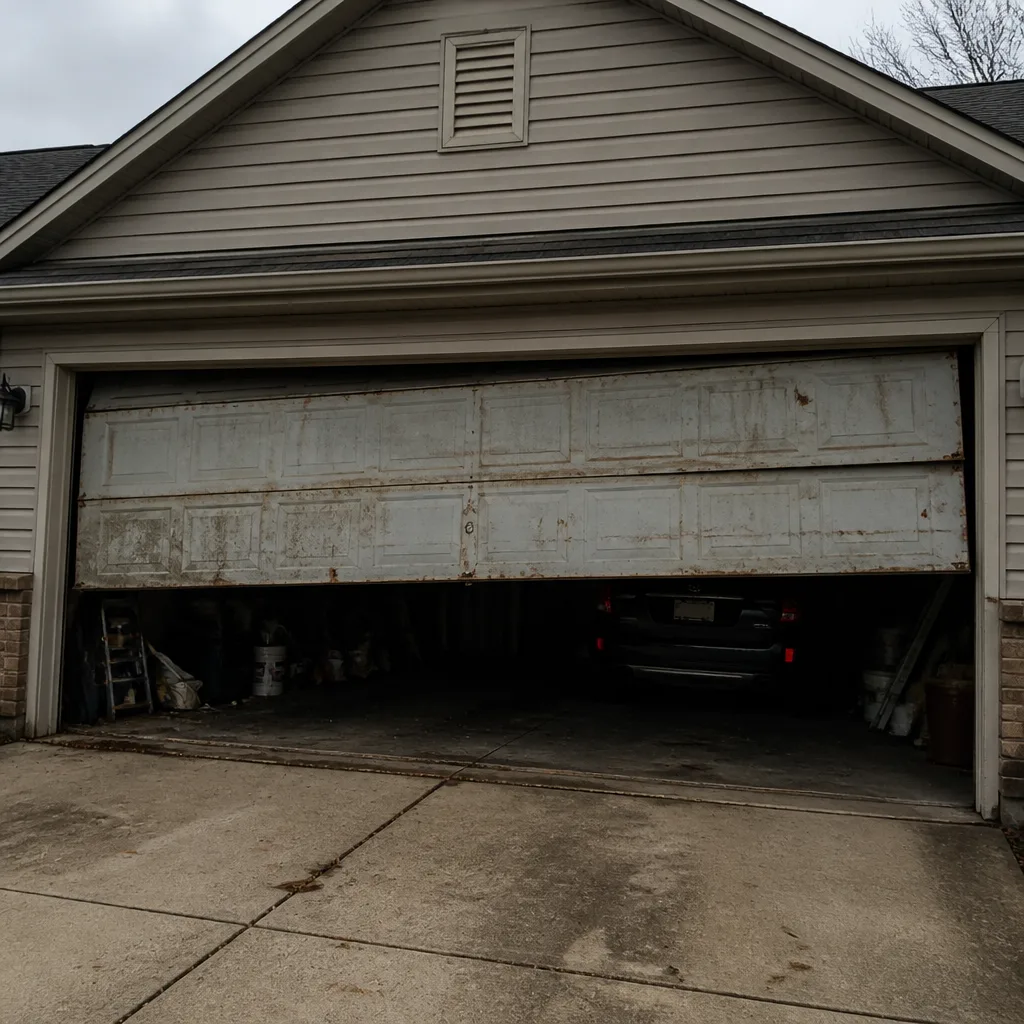 Before
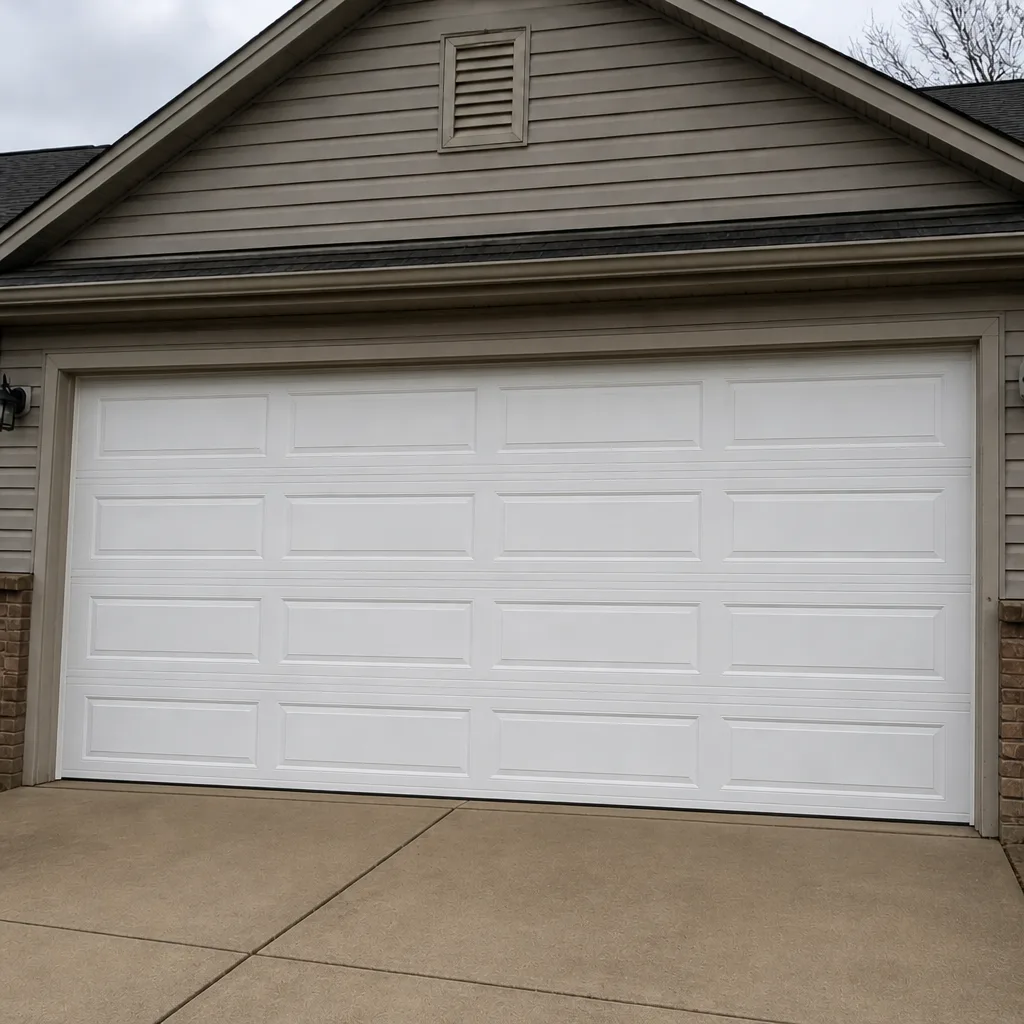 After
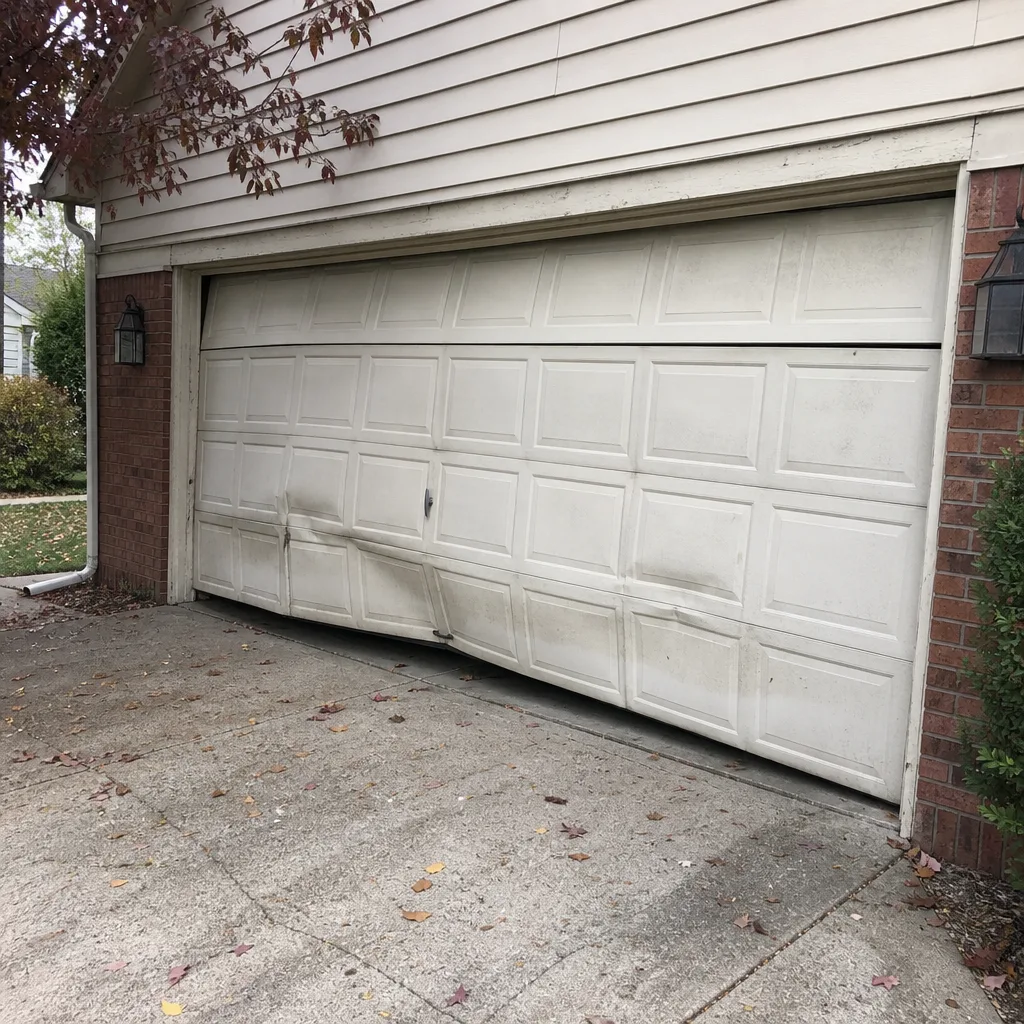 Before
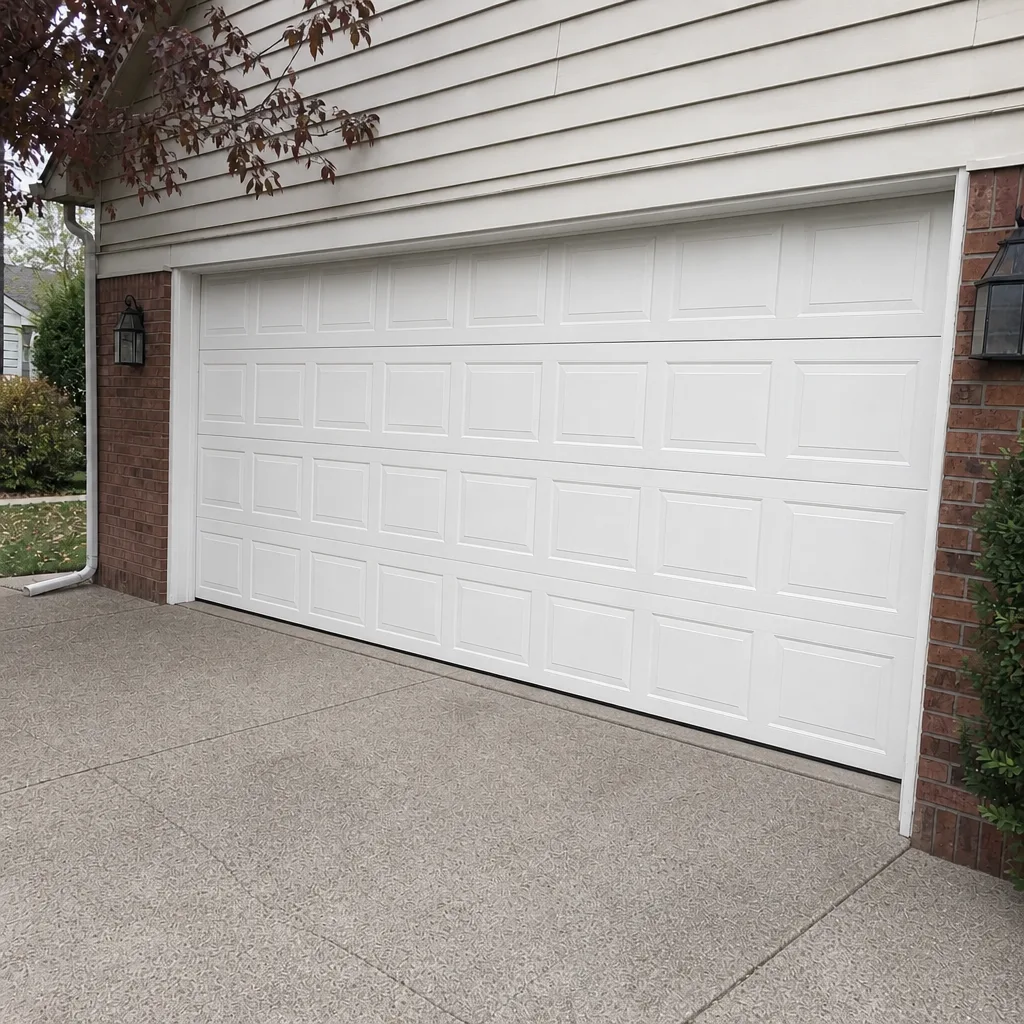 After
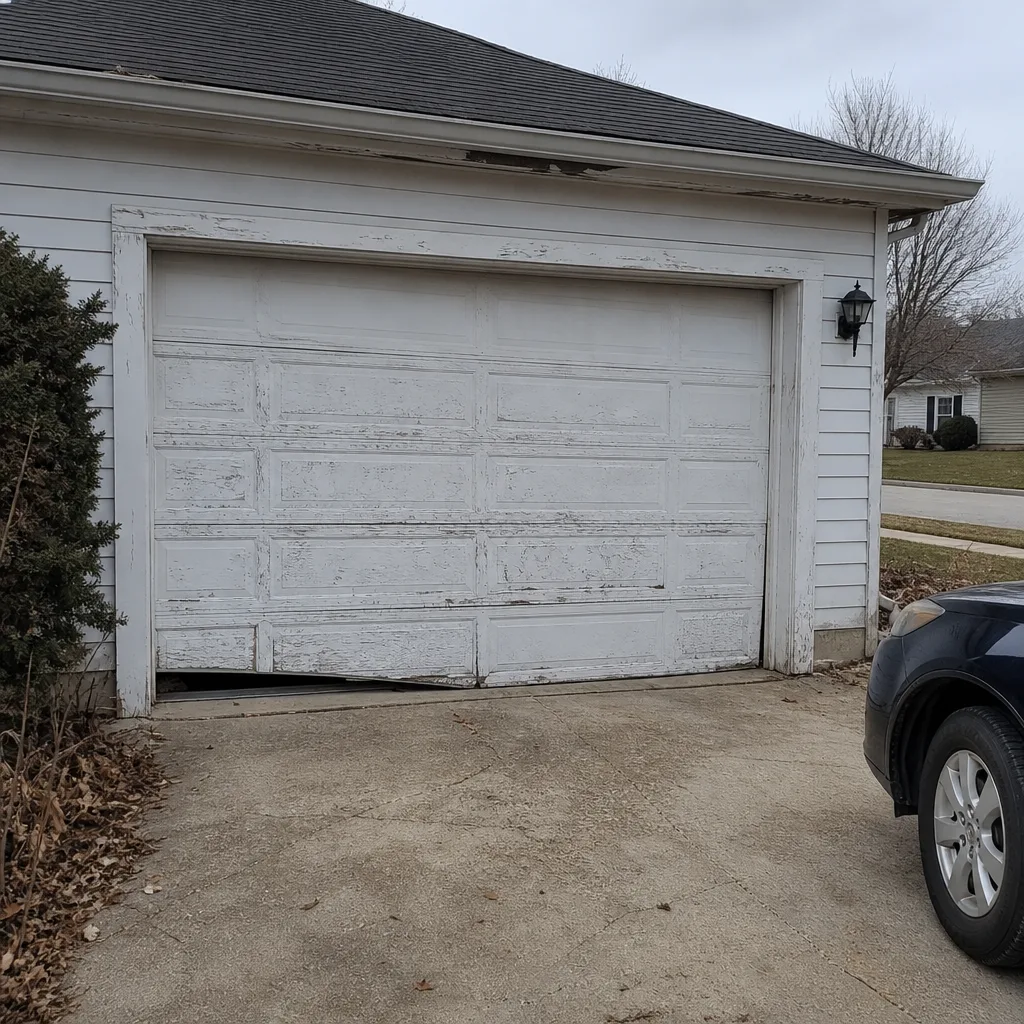 Before
 After
When to Call a Professional
Some tasks belong in your hands: lubrication, balance test, torque check and the maintenance log. Others need a trained technician with the right equipment. Call a professional if:
- The door fails the balance test (falls fast or rises on its own).
- You hear a loud snap, or the door feels suddenly much heavier.
- A cable is frayed, kinked or slack.
- The door has come off its tracks, or a track is bent.
- The opener runs but the door doesn’t move, or grinds and won’t open.
- Any spring appears broken, bent or has come loose from its anchor.
If you’re not sure, it’s worth a call to a Plainfield specialist rather than a general contractor. Plainfield Garage Door Repair Experts offers free estimates in Plainfield. Call (866) 371-6990. We answer 24/7. Fast dispatch from 7am to 7pm, Sunday through Friday. Our technicians have up to 10 years of experience and work on every major brand, including Genie, Clopay, Amarr and Wayne Dalton, so your existing door gets the right parts and the right diagnosis the first time. We offer emergency garage door service for stuck, broken or non-operational doors, and we handle everything from spring and opener repair to full installation.
Frequently Asked Questions
Every 4 to 6 months for lubrication and every 6 months for a torque check, with a full professional inspection once a year. Because Plainfield gets a hard freeze-thaw cycle, the most important times to run a balance test are right before March and right before November, when mechanical failures are most likely.
Yes, for rollers, hinges and the opener drive. Use a dedicated garage door lubricant or white lithium grease, not WD-40. Keep lubricant out of the track and off the spring coil unless you’re using the correct spring-specific product. If you’re unsure what your system needs, call (866) 371-6990 for guidance; estimates are free.
Spring fatigue is the most common cause of a door that suddenly won’t open, especially in the spring. It follows a winter of repeated freezing and thawing. A monthly balance test is the easiest way to spot it before it stops your car. If the door fails the test, call us for garage door spring repair.
You can do most routine maintenance yourself, but a professional inspection once a year is worth it. It catches issues the untrained eye misses, especially with springs, cables and track alignment. If your door is over 10 years old or you’ve never had it inspected, a professional check is a smart move. Call (866) 371-6990 for a free estimate.
Run the 30-second balance test: lift the door to waist height and let go. A properly balanced door holds or drifts slowly. A failing door drops fast or rises on its own. You may also hear a snap or feel the door getting heavier. If your door fails the test, don’t use it. Call us at (866) 371-6990; spring work is a specialist job.
The November balance test and a close look at the bottom weather seal. Cold air infiltration and spring fatigue are the two big winter risks. If the door feels heavy or the weatherstrip is cracking, schedule a check before the cold locks in. Call (866) 371-6990 for a free estimate.
All eight major residential garage door and opener brands, including LiftMaster, Genie, Chamberlain, Clopay, Amarr, Wayne Dalton, Craftsman and Raynor. Our technicians have up to 10 years of experience, so whatever system is installed, we can diagnose and service it. Call (866) 371-6990 for a free estimate.
The Bottom Line
The most useful garage door maintenance schedule is staggered rather than annual. Test balance monthly, lubricate every 4 to 6 months, torque hardware every 6 months, and book a professional inspection once a year. In Plainfield’s freeze-thaw climate, the March and November checks are the two you cannot skip. Keep a maintenance log so a technician can diagnose faster and so you have a documented history if you sell the home. Lubrication is easy to overdo; the balance test is easy to skip. Reverse that habit and your door will run quieter and last longer.
If a spring breaks, a cable fails or an opener dies, don’t force it. Plainfield Garage Door Repair Experts is the specialist team for the whole job. Call (866) 371-6990 for a free estimate. We answer 24/7. Fast dispatch from 7am to 7pm, Sunday through Friday. Our technicians have up to 10 years of experience, and we work on every major brand installed in Plainfield homes.
Written by the team at Plainfield Garage Door Repair Experts.